What Is an Engine Assembly? Long Block vs Complete Engine Explained
A comprehensive technical comparison of short blocks, long blocks, and complete turnkey engines to help you choose the right replacement powertrain.

A complete dressed engine assembly arrives with manifolds and key accessories, offering the fastest installation turnaround.
Direct Takeaway & Quick Answer
An engine assembly describes the completeness level of a replacement motor. A short block contains only the cylinder block and rotating bottom end (crankshaft, rods, pistons). A long block adds cylinder heads, camshafts, and the valvetrain. A complete (or dressed) engine includes manifolds, sensors, and external accessories, allowing for the fastest plug-and-play installation with minimal transfer labor.
- Short blocks include the machined engine block, crankshaft, connecting rods, and pistons, but exclude cylinder heads, camshafts, and all exterior components.
- Long blocks form a sealed mechanical unit with pre-timed cylinder heads, camshafts, and valvetrain components, minimizing internal assembly risks.
- Complete engines (also called dressed engines or dropouts) arrive with manifolds, fuel delivery systems, and bolt-on accessories attached for maximum labor savings.
- Salvage yard warranties on complete engines strictly cover internal lubricated powertrain components; exterior bolt-on accessories are provided as convenience items and are typically not warranted.
- Factoring in machine shop resurfacing, replacement gaskets, single-use torque-to-yield hardware, and shop labor rates makes a complete engine the most economical choice for daily drivers.
Table of Contents
- 1.Understanding Engine Assembly Classifications
- 2.What Is a Short Block Engine?
- 3.What Is a Long Block Engine?
- 4.What Is a Complete (Dressed) Engine Assembly?
- 5.Comprehensive Comparison: Short Block vs. Long Block vs. Complete Engine
- 6.Decision Guide: Which Engine Assembly Level Fits Your Project?
- 7.Cost Breakdown and Labor Economics
- 8.Accessory Warranty Policies on Complete Used Engines
- 9.How to Specify What You Need When Ordering an Engine Assembly
- 10.Common Misconceptions and Engine Swapping Pitfalls
- #Frequently Asked Questions
When a vehicle suffers catastrophic engine failure—whether from oil starvation throwing a connecting rod through the crankcase, severe overheating warping the cylinder block, or a broken timing chain causing devastating piston-to-valve collision—replacing the entire motor is frequently the only sensible economic decision. However, searching for a replacement engine immediately introduces confusing terminology: short blocks, long blocks, dressed motors, bare assemblies, and complete dropouts.
These terms are not interchangeable marketing jargon. They define fundamentally different stages of engine assembly, directly determining how many labor hours your repair shop will bill, what specialized machine work is needed, which gaskets must be purchased, and how much downtime your vehicle will experience. Buying the wrong assembly level can turn an apparently affordable engine purchase into a financial nightmare of unexpected labor invoices and mechanical incompatibilities.
This technical guide demystifies automotive engine assemblies from the ground up. We break down the precise mechanical anatomy of short blocks, long blocks, and complete assemblies, provide an exhaustive component inclusion matrix, analyze real-world labor trade-offs, clarify auto recycler warranty policies on bolt-on accessories, and provide practical advice for specifying exactly what you need when ordering.
Understanding Engine Assembly Classifications
Demystifying Powertrain Packaging Tiers from Raw Casting to Turnkey Motor
In the automotive remanufacturing and salvage industries, an "engine" is never treated as a single, uniform product. Instead, engine manufacturers, automotive recyclers, and machine shops classify powertrains into distinct packaging tiers based on the degree of assembly and component inclusion. Misunderstandings between buyers and suppliers often arise because customers assume a quoted "engine" comes complete with an alternator, starter, and turbocharger, while the supplier is pricing a bare long block.
The degree of assembly directly governs the division of labor between the engine supplier and your automotive technician. Sourcing a less-assembled unit shifts extensive mechanical teardown, cleaning, component inspection, torque verification, and gasket installation onto the installing technician. Conversely, sourcing a fully dressed assembly front-loads the build process, enabling the mechanic to perform a straightforward, drop-in replacement.
Understanding where each tier begins and ends is critical before ordering. Whether you are budgeting a repair for a daily driver, managing a commercial fleet work truck, or building a high-performance track vehicle, selecting the optimal assembly level balances upfront part expenditure against expensive shop labor rates.
Industry Insight: The Origin of Assembly Terminology
The terms "short block" and "long block" originated in mid-century American automotive remanufacturing. They do not describe the physical length or cylinder count of the engine; rather, they describe the length of the parts bill of materials and the corresponding depth of assembly completed before delivery.
What Is a Short Block Engine?
The Foundational Rotating Assembly: Block, Crankshaft, Rods, and Pistons
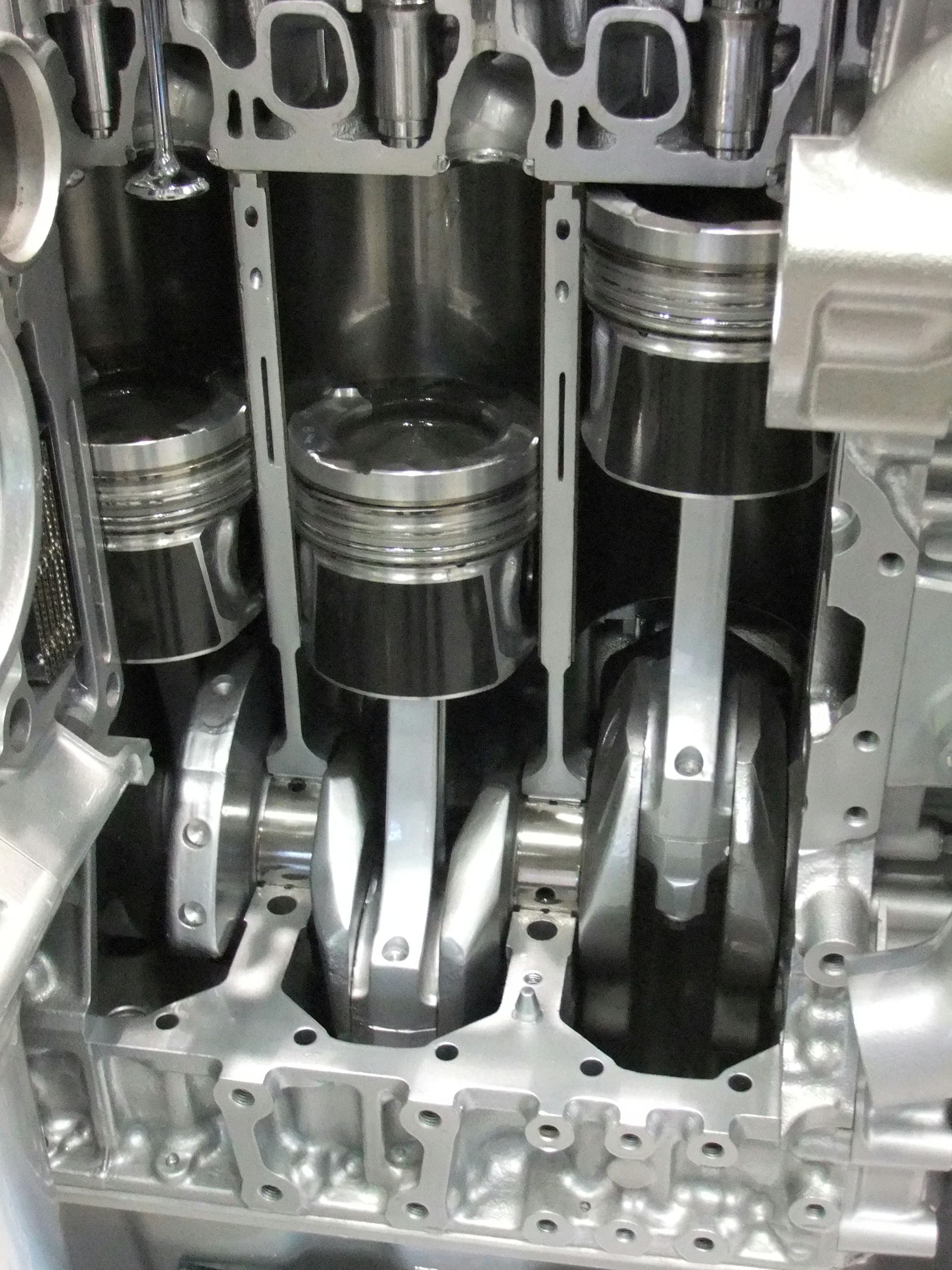
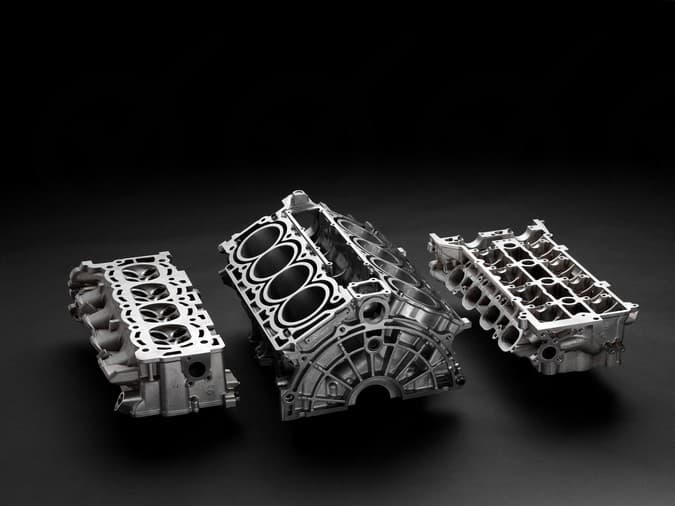
The short block represents the mechanical foundation—commonly referred to by engine builders as the "bottom end"—of any internal combustion engine. At its core is the engine block casting (manufactured from cast iron, compacted graphite iron, or aluminum alloy with cast-in or pressed iron cylinder sleeves), precision-machined to exacting factory clearances.
Inside the crankcase, the short block houses the complete rotating assembly. This includes the forged or nodular iron crankshaft supported by main journal bearings within precision-aligned main caps, forged or powdered metal connecting rods fastened with high-tensile rod bolts, and pistons fitted with gapped compression and oil-control rings. In modern overhead cam (OHC) designs, the block serves purely as the cylinder housing and crankcase, whereas in classic overhead valve (OHV) pushrod architectures, the short block may also retain the in-block camshaft and hydraulic roller lifters.
A short block does not include cylinder heads, valves, head gaskets, timing belts or chains, water pumps, oil pumps (on most configurations), intake manifolds, or electrical sensors. Choosing a short block requires the installer to transfer all remaining components from the failed engine or purchase brand-new replacements, verifying deck flatness, piston-to-valve clearances, and camshaft timing synchronization by hand.
- Engine Block Casting: Chemically cleaned, magnetic particle or dye-penetrant inspected for cracks, align-honed, and cylinder bores finished with torque plates.
- Crankshaft & Bearings: Precision ground, micro-polished journals, dynamically balanced, and fitted with matched tri-metal or bi-metal main bearings.
- Connecting Rods & Fasteners: Reconditioned or new connecting rods, checked for bend and twist, fitted with precision rod bearings and high-tensile rod bolts.
- Pistons, Wrist Pins & Rings: Precision-fitted hypereutectic or forged pistons, floating or pressed wrist pins, and file-fit compression and oil control rings.
- Plugs & Inserts: Brass or coated steel freeze plugs (core plugs) and threaded oil gallery galley plugs installed and sealed.
- Excluded Components: Cylinder heads, head bolts/studs, camshafts, valvetrain, oil pan, oil pickup, timing cover, water pump, manifolds, and all electrical accessories.
What Is a Long Block Engine?
The Sealed Mechanical Core: Short Block Plus Cylinder Heads and Valvetrain
A long block represents the most popular configuration in the engine remanufacturing sector. It takes a complete short block assembly and tops it with fully reconditioned or brand-new cylinder heads, high-strength head bolts or studs, and factory multi-layer steel (MLS) head gaskets. The combustion chambers are fully sealed, vacuum-tested, and ready for long-term service.
Beyond the heads, a long block includes the entire valve train: intake and exhaust valves, valve springs, retainers, keepers, valve stem seals, rocker arms, and camshafts. Crucially, the timing mechanism—whether gears, timing chains with hydraulic tensioners, or a timing belt assembly—is installed and synchronized to exact top dead center (TDC) alignment specs under controlled cleanroom conditions. Most remanufactured long blocks also include the oil pump, oil pickup tube, and oil pan, as well as the timing cover and valve covers.
The primary advantage of a long block is risk reduction. Because the cylinder heads, head gaskets, and timing assembly are pre-installed and torqued by experienced powertrain technicians, the installing mechanic does not need to perform delicate valve lash adjustments, timing synchronization, or multi-step torque-to-yield head bolt procedures. However, the technician must still unbolt and transfer the intake manifold, exhaust manifolds, fuel injection system, ignition coils, and accessory brackets from the old engine.
Technical Criticality: Timing Synchronization and MLS Head Gaskets
On modern interference engines, an incorrectly installed timing belt or mistimed chain will cause instantaneous valve-to-piston impact upon cranking, destroying the engine. Long blocks eliminate this risk because factory-calibrated timing jigs ensure perfect camshaft-to-crankshaft phasing before shipment.
What Is a Complete (Dressed) Engine Assembly?
Turnkey Powertrain: Long Block with Manifolds, Fuel Delivery, and External Accessories
In the automotive recycling and salvage yard marketplace, the complete engine assembly is the gold standard for rapid, cost-effective vehicle restoration. Unlike remanufacturers who strip donor engines to bare metal, professional automotive recyclers extract functioning engines directly from running donor vehicles (such as collision total losses where the powertrain was unaffected). These units are carefully unbolted rather than disassembled.
A complete engine assembly includes the long block core plus virtually every functional component bolted to the outside of the casting. This encompasses the intake manifold assembly (with throttle body and intake air plenum), exhaust manifolds, high-pressure direct injection or port fuel rails, fuel injectors, ignition coil packs, harmonic balancer, water pump, thermostat housing, and oil filter housing.
In many cases, recyclers also leave secondary accessory drive components attached to the assembly, such as the alternator, power steering pump, air conditioning compressor, starter motor, and serpentine belt tensioners. While these bolt-on accessories are primarily included for transit protection and buyer convenience, they can save an installing shop anywhere from 8 to 15 hours of transfer labor.
- Sealed Long Block Core: Cylinder block, rotating assembly, cylinder heads, camshafts, and valve covers.
- Induction & Exhaust: Upper and lower intake manifolds, electronic throttle body, and factory exhaust manifolds.
- Fuel & Ignition Delivery: Fuel injectors, high/low pressure fuel lines, fuel rails, and direct-ignition coil packs.
- Sensors & Harnesses: Cam/crank position sensors, knock sensors, coolant temp sensors, and partial engine wiring harness.
- Engine Accessories (Varies by Recycler): Alternator, AC compressor, power steering pump, water pump, and idler pulleys.
- Drive Plate: Flywheel (for manual gearboxes) or flexplate (for automatic transmissions) balanced to the crankshaft.
Pro Tip: Retaining Original Wear Components
Even when purchasing a complete dressed engine with low mileage, always inspect wear items such as the water pump, thermostat, spark plugs, and serpentine belt. Replacing these inexpensive wear items while the motor is sitting on an engine hoist takes minutes, compared to hours once installed in a cramped engine bay.
Comprehensive Comparison: Short Block vs. Long Block vs. Complete Engine
Component-by-Component Inclusion Checklist and Labor Overhead
Choosing the right assembly tier requires matching the specific mechanical requirements of your repair project against shop labor rates. When you buy fewer pre-assembled components, you pay less to the parts supplier but substantially more to your mechanic.
The following comparison table breaks down component inclusion across all three primary engine packaging levels, highlighting the mechanical responsibilities associated with each tier.
| Component Group | Short Block | Long Block | Complete (Dressed) Engine |
|---|---|---|---|
| Engine Cylinder Block Casting | Included & Machined | Included & Sealed | Included & Sealed |
| Crankshaft & Main Bearings | Included & Installed | Included & Installed | Included & Installed |
| Pistons, Wrist Pins & Rings | Included & Fitted | Included & Fitted | Included & Fitted |
| Connecting Rods & Bearings | Included & Torqued | Included & Torqued | Included & Torqued |
| Cylinder Heads & Head Gaskets | Not Included (Bare) | Included & Torqued | Included & Torqued |
| Camshaft(s), Valves & Springs | Not Included | Included & Adjusted | Included & Adjusted |
| Timing Chain/Belt, Gears & Covers | Not Included | Included & Synchronized | Included & Synchronized |
| Oil Pump, Pickup Tube & Oil Pan | Varies by builder | Included & Sealed | Included & Sealed |
| Harmonic Balancer / Crank Pulley | Not Included | Varies by supplier | Included & Torqued |
| Valve Covers & Rocker Covers | Not Included | Included & Gasketed | Included & Gasketed |
| Intake Manifold & Throttle Body | Not Included | Not Included (Transfer) | Included & Mounted |
| Exhaust Manifolds & Heat Shields | Not Included | Not Included (Transfer) | Included & Mounted |
| Fuel Injectors, High-Pressure Rail & Lines | Not Included | Not Included (Transfer) | Included & Connected |
| Ignition Coils & Engine Sensors | Not Included | Not Included (Transfer) | Included & Plugged |
| Alternator, Starter & AC Compressor | Not Included | Not Included (Transfer) | Included (Convenience Item) |
| Water Pump, Thermostat & Housing | Not Included | Varies by builder | Included & Mounted |
| Typical Shop Installation Labor | 25 to 40 Hours | 14 to 22 Hours | 8 to 14 Hours |
Decision Guide: Which Engine Assembly Level Fits Your Project?
Evaluating Vehicle Value, Shop Labor Rates, and Mechanical Skill
Deciding which engine assembly tier to purchase depends on three variables: the nature of your original engine failure, whether you are performing the swap yourself or paying professional shop labor rates, and the condition of your existing auxiliary components.
If your vehicle suffered a spun rod bearing or scored cylinder wall due to low oil, but your cylinder heads, camshafts, intake manifold, and accessories are clean and unblemished, a long block or complete engine is still recommended unless you own specialized machine shop equipment. Reusing cylinder heads from an engine that experienced catastrophic bottom-end failure carries high risk: microscopic metal debris pumped through the oil passages can contaminate the donor block within seconds of startup.
Below is a strategic decision workflow to help you select the ideal assembly configuration for your specific vehicle and budget constraints.
- 1Diagnose the Root Cause of Failure: If the engine suffered a broken valve, dropped valve seat, or warped cylinder head from extreme overheating, your original heads are unusable—eliminate short blocks immediately and choose a long block or complete engine.
- 2Inspect External Auxiliaries and Manifolds: If the vehicle experienced an underhood electrical fire, physical front-end collision impact cracking the intake manifold, or catastrophic turbocharger failure blowing shrapnel into the intake runners, a complete dressed engine is required to replace damaged bolt-on parts.
- 3Calculate Total Labor Costs at Local Shop Rates: Independent repair shops bill between $120 and $220 per hour. Paying a technician 12 additional hours to strip, clean, reseal, and transfer components onto a short or long block will add $1,400 to $2,600 to your labor bill, quickly erasing any initial part savings.
- 4Assess Vehicle Downtime and Turnaround Needs: If the vehicle is a daily driver or revenue-producing commercial fleet asset, a complete used engine can be installed and running in 2 to 3 business days, whereas rebuilding around a short block typically requires 2 to 4 weeks.
Cost Breakdown and Labor Economics
Why a "Cheaper" Assembly Can Cost Thousands More in Shop Labor
A common mistake made by vehicle owners facing engine failure is purchasing the lowest-priced component on paper—frequently a bare short block or remanufactured bare casting—without understanding the ancillary expenses required to make that engine run. The purchase price of the core casting is only one component of the total repair invoice.
When installing a short block, the technician must thoroughly clean and inspect your old cylinder heads, send them to an automotive machine shop for pressure testing and surface resurfacing ($250 to $600), purchase a comprehensive master overhaul gasket kit ($300 to $700), replace single-use torque-to-yield (TTY) cylinder head bolts ($60 to $180), install a complete new timing chain or belt kit with tensioners ($200 to $500), and spend 25 to 35 labor hours building the motor on an engine stand before dropping it into the bay.
Conversely, a verified, compression-tested complete used engine from a reputable auto recycler arrives with heads, timing assembly, oil pan, manifolds, and fuel systems already factory-sealed. The technician only needs to unbolt the old powertrain, swap over any necessary chassis-specific sensor harnesses, and bolt the replacement assembly directly to the transmission bellhousing and motor mounts. Even if the complete used engine costs $500 to $1,000 more upfront than a bare long block, the savings in shop labor and new gasket hardware consistently result in a lower final out-of-pocket invoice.
The Hidden Cost Trap of Single-Use Fasteners and Gaskets
Modern engines utilize Torque-to-Yield (TTY) bolts for cylinder heads, main bearing caps, camshaft sprockets, and harmonic balancers. These fasteners stretch permanently during installation and cannot be reused. Building around a short block requires purchasing dozens of expensive replacement OEM fasteners and complete gasket sets.
Accessory Warranty Policies on Complete Used Engines
Understanding Recycler Warranties, Internal Lubricated Parts, and Bolt-On Exclusions
When purchasing a complete used engine from an automotive recycling network, buyers must clearly understand standard automotive recycling warranty protocols. Reputable recyclers thoroughly test and guarantee the structural engine core: the engine block casting, cylinder heads, crankshaft, camshafts, pistons, connecting rods, and internal lubricated bearings. If a rod knocks, piston rings fail compression, or a head gasket leaks within the warranty period, the warranty protects you.
However, any external bolt-on electrical or mechanical accessories left attached to the engine—such as the alternator, air conditioning compressor, power steering pump, starter motor, coil packs, water pump, and engine wiring harness—are provided strictly as "convenience items." Recyclers leave these items attached because extracting them is labor-intensive, and their presence shields delicate intake ports and sensor ports from moisture and debris during transit.
Because donor vehicles may sit in staging yards prior to dismantling, external bearings on alternators or seals on water pumps may deteriorate and are excluded from standard powertrain replacement guarantees. Installers should treat attached accessories as potential bonus spares, verifying their functionality against the vehicle’s original known-good components before buttoning up the engine bay.
Warranty Checklist: What Is Not Covered on Dressed Engines
Powertrain warranties explicitly exclude: alternators, starter motors, A/C compressors, power steering pumps, water pumps, spark plugs, ignition coils, engine sensors, thermostat housings, drive belts, and rubber hoses. If an included alternator does not charge, transfer your original alternator onto the motor.
How to Specify What You Need When Ordering an Engine Assembly
VIN Decoding, Transmission Pairings, and Avoiding Return Freight Fees
Ordering a replacement powertrain requires precision. Automotive manufacturers frequently introduce subtle engineering updates midway through a vehicle generation—such as modifying crankshaft sensor reluctor wheels, updating variable valve timing solenoids, or shifting from hydraulic to electronic power steering pumps. Relying solely on your vehicle’s year, make, and model is insufficient.
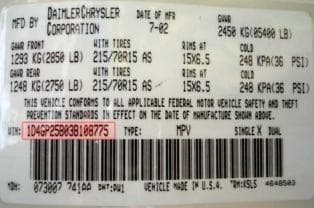
The gold standard for accurate fitment is the 17-digit Vehicle Identification Number (VIN). The 8th character of your VIN represents the manufacturer engine code, pinpointing the exact horsepower rating, induction method, and cylinder head revision fitted to your chassis. Sourcing teams use this digit alongside the Hollander Interchange system to cross-reference verified donor powertrains.
Furthermore, always communicate whether your vehicle is equipped with an automatic or manual transmission. Automatic transmissions utilize a stamped steel flexplate, whereas manual gearboxes require a heavy cast or forged flywheel and a crankshaft machined to house a pilot bearing. Noting whether your vehicle requires California (CARB) emissions compliance prevents receiving an exhaust manifold casting that lacks secondary air injection ports.
- Full 17-Digit VIN: Decodes the 8th character engine code and 10th character model year for guaranteed compatibility.
- Transmission Pairing: Specify automatic flexplate vs. manual flywheel and pilot bearing requirements.
- Drivetrain Layout: Note whether the vehicle is Front-Wheel Drive (transverse), Rear-Wheel Drive (longitudinal), AWD, or 4WD.
- Emissions Standards: Clarify Federal EPA vs. California CARB emissions equipment to match catalytic converter and manifold bungs.
- Delivery Logistics: Confirm whether freight delivery will be to a commercial repair shop with a loading dock or a residential driveway requiring liftgate service.
Common Misconceptions and Engine Swapping Pitfalls
Avoiding Costly Assumptions About Fitment, Electronics, and Plug-and-Play Claims
A widespread misconception among buyers is that two engines sharing the same displacement (for instance, two 2.5-liter or 5.3-liter engines from the same automaker) are mechanically identical. In reality, automotive manufacturers frequently modify crankshaft reluctor wheel tooth counts (such as 24-tooth versus 58-tooth trigger wheels), change cylinder head casting ports, or update variable cam timing mechanisms mid-generation. An engine with the incorrect reluctor wheel will bolt up perfectly but will never start because the engine control module cannot synchronize the ignition timing.
Another critical pitfall involves oil cooler contamination. When an engine fails catastrophically due to bearing delamination or rod failure, the oil pump circulates billions of microscopic metallic particles throughout the auxiliary oil cooler lines and remote radiator heat exchanger. If the installer drops in a fresh replacement engine without thoroughly flushing or replacing the oil cooler, those trapped metal shards immediately wash into the new engine’s main bearings upon first crank, destroying the replacement unit within minutes.
Finally, buyers often assume a complete engine includes the vehicle’s Engine Control Module (ECM) and will plug directly into their car without programming. However, modern vehicle immobilizer and anti-theft systems pair the ECM cryptically with the vehicle’s instrument cluster and ignition key transponder. Sourcing a complete engine assembly means keeping your original vehicle ECM and wiring harness, transferring any incompatible sensors from your original block to ensure factory communication.
Technical Requirement: Reusing Your Vehicle’s Original Sensors
Even within the same vehicle generation, automakers frequently update electrical harness pinouts and sensor resistance values between model years. Professional mechanics always transfer the original vehicle’s knock sensors, cam/crank sensors, and coolant temperature sensors onto the replacement complete engine to prevent check engine lights and communication faults with the engine control module (ECM).
Frequently Asked Questions
What is the main difference between a long block and a complete engine assembly?
A long block consists of the cylinder block, rotating assembly (crankshaft, rods, pistons), and cylinder heads with installed camshafts and valvetrain, but lacks external manifolds and accessories. A complete engine includes everything on the long block plus intake and exhaust manifolds, fuel injection components, sensors, and bolt-on accessories like the alternator, water pump, and AC compressor.
A long block requires your mechanic to transfer all external components from your old motor, while a complete engine arrives ready for near drop-in installation.
Are bolt-on accessories on a complete used engine covered by the warranty?
No, standard auto recycling warranties cover only the internal lubricated components of the engine (block, heads, crankshaft, pistons, camshafts, and valvetrain). External bolt-on accessories such as the alternator, starter, AC compressor, water pump, and sensors are included for convenience and transit protection and are not warranted against failure.
Most technicians recommend installing new wear components like the water pump, thermostat, and spark plugs prior to dropping the engine into the bay.
Can I install a complete used engine from an automatic vehicle into a manual transmission car?
In most modern vehicles, the underlying long block casting is identical, but you must remove the donor engine’s automatic flexplate and install your original manual flywheel, clutch assembly, and crankshaft pilot bearing or bushing.
Always verify whether the crankshaft end is machined to accept a pilot bearing, as rare manufacturer exceptions exist where crankshaft forgings differ.
What parts should always be replaced when installing a replacement engine assembly?
Regardless of whether you purchase a long block or complete engine, you should always replace the front and rear crankshaft main seals, oil pan gasket (if removed), water pump, thermostat, spark plugs, accessory drive belts, and all engine fluids and filters.
Replacing the rear main seal while the engine is unbolted on a hoist takes roughly 15 minutes but prevents costly transmission removal later if an old seal leaks.
Why would an enthusiast or mechanic choose a short block instead of a complete engine?
A short block is preferred when building a custom high-performance engine, pairing a new bottom end with aftermarket CNC-ported cylinder heads, or when the vehicle’s original cylinder heads and top-end induction system are already modified and undamaged.
Short blocks are also commonly selected by specialized machine shops equipped with the tools and cleanroom facilities to assemble custom valvetrain setups in-house.
How do professional auto recyclers test complete used engines before shipping?
Licensed recyclers perform a multi-point inspection protocol that includes checking odometer authenticity, inspecting the oil pan and valve covers for sludge or metal shavings, running the engine to operating temperature to verify oil pressure, and conducting cylinder compression or leakdown tests before draining fluids and palletizing.
Compression testing ensures equal pressure across all cylinders, confirming healthy piston rings, cylinder walls, and valve sealing prior to freight dispatch.
Ready to Replace Your Failed Engine?
Avoid expensive dealership markups and excessive shop labor. Browse our nationwide inventory of verified, compression-tested used engine assemblies backed by our comprehensive warranty and freight shipping directly to your repair shop.
Relevant Parts Inventory
Tested Used OEM Engines
PopularSearch compression-tested recycled complete engine assemblies and long blocks with nationwide warranty protection.
Search All Recycled Parts
Browse our complete catalog of OEM recycled auto parts, drivetrains, and mechanical assemblies.
Contact Powertrain Specialists
Speak with our engine fitment experts to verify your 17-digit VIN, engine code, and assembly requirements.