VIN Number Guide: How to Identify the Right Auto Part for Your Vehicle
A comprehensive technical handbook on decoding the 17-character VIN, pinpointing powertrain codes, and ensuring 100% direct-fit replacement parts.
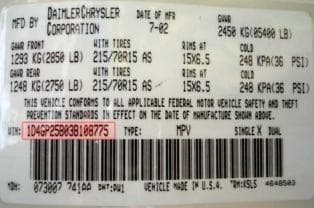
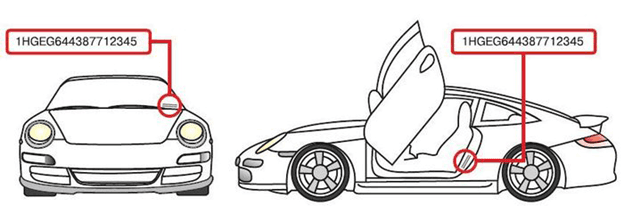
The 17-character VIN plate visible through the driver-side lower windshield provides the definitive factory blueprint for replacement parts fitment.
Direct Takeaway & Quick Answer
Your vehicle's 17-character Vehicle Identification Number (VIN) is the definitive identifier for sourcing replacement auto parts, capturing running production updates, specific engine codes (the 8th character), transmission types, and factory chassis options that trim badges overlook. Verifying your VIN before purchasing used engines, transmissions, or electrical modules eliminates fitment mismatches, freight return hassles, and costly mechanic downtime.
- Standardized since 1981 under NHTSA 49 CFR Part 565 and ISO 3779, a 17-digit VIN encodes country of origin, manufacturer, chassis type, engine code, model year, and sequential build number.
- The 8th character specifically identifies the engine configuration, differentiating between incompatible sub-variants, emissions standards (CARB vs. Federal), and fuel delivery systems.
- Positions 1-3 form the World Manufacturer Identifier (WMI), positions 4-9 represent the Vehicle Descriptor Section (VDS), and positions 10-17 comprise the Vehicle Identifier Section (VIS).
- Position 10 identifies the vehicle model year using a standardized rotating alphanumeric cycle, while position 9 functions as a mathematical check digit to catch data entry errors.
- Professional automotive recyclers use your VIN to query computerized Hollander Interchange catalogs, ensuring used powertrains match donor wiring harnesses, bellhousing patterns, and axle ratios.
Table of Contents
- 1.What Is a VIN and Where to Locate It on Your Vehicle
- 2.Deconstructing the 17-Character VIN: WMI, VDS, and VIS
- 3.The 8th Character: The Master Key to Automotive Engine Identification
- 4.How the VIN Dictates Exact Fitment Across Vehicle Systems
- 5.Using the VIN to Verify Used Engine and Transmission Compatibility
- 6.VIN Decoding Tools and Resources: How to Decode Your VIN Online
- 7.Common VIN-Related Mistakes When Ordering Auto Parts
- 8.Why VIN Verification Is Indispensable for Used Auto Parts
- #Frequently Asked Questions
Few automotive repair experiences are more frustrating or expensive than ordering a replacement powertrain or chassis component, waiting days for freight delivery, and having your mechanic discover on the lift that the bolt patterns, electrical connectors, or sensor ports do not match. When replacing critical assemblies—such as long block engines, automatic transmissions, steering racks, or electronic control units—simply knowing your car's year, make, model, and trim level is frequently not enough.
Automakers continually revise mechanical components mid-year, alternate between multiple Tier-1 parts suppliers, and offer distinct powertrain variants beneath seemingly identical exterior badging. A single model year of a popular pickup truck or sedan may feature three different engine displacements, two separate automatic transmission models, standard versus heavy-duty brake calipers, and California CARB versus Federal emissions calibrations. The only foolproof key to cutting through this complexity is your vehicle's 17-character Vehicle Identification Number (VIN).
This comprehensive guide provides an exhaustive breakdown of automotive VIN architecture. You will learn where to locate your VIN both on the vehicle and in documentation, how to decode each individual segment (including the critically important 8th-digit engine code), how professional salvage networks utilize VINs to verify used part interchangeability, and the common pitfalls to avoid when ordering replacement components online.
What Is a VIN and Where to Locate It on Your Vehicle
Physical Stamping Locations and Legal Documentation Checkpoints
Often described as an automobile's DNA or fingerprint, the modern Vehicle Identification Number is a legally mandated, standardized 17-character alphanumeric identifier. Established in its modern format by the National Highway Traffic Safety Administration (NHTSA) under Title 49 of the Code of Federal Regulations (49 CFR Part 565) and internationally standardized under ISO 3779, every highway-certified vehicle produced since model year 1981 carries this unique code. No two vehicles manufactured within a 30-year window share the same sequence.
When sourcing replacement parts, having immediate access to your VIN is essential. The primary physical location on virtually all modern vehicles is the metal VIN plate mounted to the driver-side lower corner of the dashboard instrument panel, viewable from outside the vehicle through the windshield glass. This plate is permanently riveted to the cowl structure at the factory to prevent tampering and provide clear visibility for safety inspections and law enforcement.
The second critical physical location is the Federal Safety Certification label (often called the door jamb or B-pillar sticker). Located on the driver-side door post or edge of the driver door, this placard contains the VIN alongside essential production details: gross vehicle weight ratings (GVWR), front and rear gross axle weight ratings (GAWR), factory tire sizing, and paint and trim codes. In body-on-frame trucks and SUVs, the VIN is additionally stamped directly into the steel frame rail, while unibody passenger cars frequently feature a secondary VIN stamp on the firewall bulkhead or front strut tower.
If your vehicle is currently in a repair shop or inaccessible, you do not need to inspect the vehicle physically. Your official state vehicle registration card, certificate of title, current automotive insurance card, and original dealership sales or service agreements all clearly list the full 17-character VIN. Always double-check documentation against the physical windshield plate whenever possible to rule out past administrative clerical errors.
- Driver-Side Lower Windshield: Stamped metal plate viewable from outside above the steering column cowl.
- Driver-Side Door Jamb (B-Pillar): Federal safety certification sticker displaying VIN, tire pressure specs, and paint codes.
- Under-Hood Firewall or Strut Tower: Secondary stamped steel unibody location on select European and domestic models.
- Body-on-Frame Rails: Chemically etched or stamped directly onto passenger or driver chassis frame rails on pickup trucks and SUVs.
- Vehicle Legal Documents: State registration card, vehicle title, auto insurance ID card, and professional repair invoices.
Collision Repair Verification Tip
If your vehicle was previously involved in a major collision where the driver-side door was replaced with a salvage door, the sticker on the door shell may show the donor car's VIN rather than yours. Always verify the VIN on the dashboard windshield plate or engine firewall to ensure you are referencing the true chassis identity.

Deconstructing the 17-Character VIN: WMI, VDS, and VIS
How Automakers Encode Country, Manufacturer, Chassis, Year, and Plant
To the untrained eye, a 17-character VIN appears as an arbitrary string of numbers and capital letters. In reality, every single character position within the sequence is strictly regulated and carries precise engineering meaning. By understanding how this code is compartmentalized into three primary blocks—WMI, VDS, and VIS—you can rapidly interpret the foundational specifications of your vehicle.
The first three positions represent the World Manufacturer Identifier (WMI). Position 1 denotes the nation or geographic region of assembly. For example, numbers 1, 4, and 5 indicate assembly within the United States; 2 indicates Canada; 3 indicates Mexico; J indicates Japan; K indicates South Korea; W indicates Germany; and S indicates the United Kingdom. Position 2 identifies the manufacturer division (e.g., G for General Motors, F for Ford, C for Chrysler, T for Toyota, H for Honda). Position 3 specifies the vehicle category or manufacturing division (such as passenger vehicle, light truck, or commercial multi-purpose chassis).
Positions 4 through 9 form the Vehicle Descriptor Section (VDS). Characters 4 through 8 describe the vehicle model line, series, body style, restraint system type, and powertrain configuration. Position 9 holds special technical significance as the "Check Digit." Mandated by NHTSA, the check digit is calculated through a complex mathematical formula that assigns weighted values to each preceding character using a modulus 11 algorithm. This mathematical checksum prevents fraudulent VIN cloning and catches transcription typos when ordering parts.
The final segment, positions 10 through 17, is the Vehicle Identifier Section (VIS). Position 10 indicates the vehicle's official model year using a standardized 30-year rotating cycle of letters (excluding I, O, Q, U, and Z) and numbers 1 through 9. Position 11 represents the specific assembly plant code where the vehicle was built. Positions 12 through 17 contain the sequential production serial number, establishing the precise order in which the vehicle rolled off the assembly line.
| Position | Segment | Function / Description | Example Character | Decoded Information |
|---|---|---|---|---|
| 1 | WMI | Country of Origin / Geographic Region | 1, 4, 5 / J / W | 1 = United States, J = Japan, W = Germany |
| 2 | WMI | Automotive Manufacturer | G / F / C / T | G = General Motors, F = Ford, T = Toyota |
| 3 | WMI | Vehicle Type / Manufacturing Division | 1 / A / 4 | 1 = Chevrolet Truck, A = Audi Sedan |
| 4-8 | VDS | Vehicle Attributes (Body Style, Engine, Restraints) | C, E, 2, K, etc. | Body style, brake system, engine displacement, cab type |
| 8 | VDS | Engine Code / Powertrain Specification | C / T / 5 | Specific engine displacement, aspiration, and fuel type |
| 9 | VDS | Security Check Digit | 0-9 or X | Mathematical checksum verifying VIN authenticity |
| 10 | VIS | Model Year Code | P (1993), K (2019), L (2020) | Rotating 30-year alphanumeric model year designator |
| 11 | VIS | Assembly Plant Code | F (Dearborn), 1 (Wentzville) | Specific factory where vehicle was assembled |
| 12-17 | VIS | Sequential Production Serial Number | 100001 - 999999 | Exact numeric order in which vehicle rolled off assembly line |
The Modulus 11 Check Digit Algorithm
Position 9 is generated using a mathematical weighting system. Each letter in the VIN is assigned a numeric value, multiplied by a position-based weight factor, summed, and divided by 11. The remainder (0-9 or X for 10) must match position 9. If a customer accidentally swaps two numbers or misreads a letter, the check digit fails instantly, flagging the error before an incorrect part is shipped.
The 8th Character: The Master Key to Automotive Engine Identification
Why the 8th VIN Digit Matters More Than Trim Badges for Powertrain Fitment
When customers contact our parts specialists searching our used engine inventory, the most frequent point of confusion involves vehicle badging versus true engine codes. A customer might report that they drive a "5.3-liter V8 Silverado" or a "2.0-liter EcoBoost Ford Escape." However, across modern automotive platforms, a single advertised engine displacement often encompasses three or four mechanically distinct engine variations that cannot be interchanged.
Under North American federal standards (49 CFR Part 565), position 8 of the VIN is the universal engine code designator. This single character tells professional recyclers and mechanics everything necessary regarding internal architecture. For example, in a GM truck platform, an 8th digit of "C" designates a standard gasoline 5.3L engine, while an 8th digit of "0" or "3" may indicate an active fuel management (AFM) flex-fuel variant with distinct high-pressure fuel injectors, camshaft profiles, and valve train lifters.
Similarly, on Ford vehicles, the 8th digit separates naturally aspirated four-cylinder engines from twin-scroll turbocharged EcoBoost variants of identical displacement. On Stellantis vehicles, position 8 differentiates standard 5.7L HEMI V8 engines from versions equipped with Multi-Displacement System (MDS) cylinder shutoff or mild-hybrid eTorque systems. Ordering a replacement long block based only on displacement without matching the 8th digit frequently leads to non-functional wiring harness connections, mismatched exhaust manifold flanges, and catastrophic ECM communication errors.
Before purchasing any used engine, cylinder head assembly, or intake manifold, always confirm the 8th digit of your VIN. At USA Used Auto Parts, our automated inventory matching engine requires this character to ensure that any recycled engine we ship is a 100% plug-and-play mechanical replacement.
Never Order an Engine by Displacement Alone
Two engines of identical cubic centimeters or liters can have different starter mounting positions, variable valve timing (VVT) actuator counts, crankshaft reluctor wheel tooth counts (e.g., 24x vs. 58x), and oil pan sump orientations. The 8th character of your VIN is your sole defense against these hidden mechanical incompatibilities.
How the VIN Dictates Exact Fitment Across Vehicle Systems
Beyond Powertrains: Suspension, Brakes, Steering, and Electrical Architecture
While engine and transmission compatibility are the most obvious applications of VIN decoding, modern automotive engineering requires VIN-level precision across virtually every vehicle subsystem. Automotive assembly plants do not produce static, uniform vehicles for an entire calendar year. Instead, manufacturers practice continuous production improvements, update electronic architectures, and switch component suppliers during active assembly runs.
In the automotive parts industry, these mid-year engineering shifts are known as "running production changes" or "VIN splits." For example, an automaker might manufacture the first 45,000 units of a model year with a 280mm front brake rotor and a specific brake caliper bracket, then transition starting with serial number 045001 to a 305mm rotor with a revised knuckle mounting pitch. Sourcing replacement brake components, steering knuckles, or hub bearing assemblies requires matching the sequential production digits (positions 12 through 17) to verify the build cutoff point.
Furthermore, factory optional equipment packages heavily influence component fitment. Two vehicles identical in trim, year, and color may have completely different alternators depending on whether the original buyer selected a snow plow prep package (160-amp vs. 220-amp alternator). Similarly, vehicles equipped with sport suspension packages receive stiffer stabilizer sway bars, aluminum control arms, and distinct strut valving compared to base models. Entering your full VIN in our parts catalog decodes these exact factory options to deliver flawless component fitment.
Modern networked electronic modules represent another critical area. Body Control Modules (BCM), Anti-lock Braking System (ABS) hydraulic units, Instrument Clusters, and Electronic Power Steering (EPS) racks are flashed at the factory with specific firmware calibrated to your vehicle's exact VIN and option matrix. Sourcing an exact matching module from a salvage donor vehicle requires verifying that both the VIN profile and OEM module hardware numbers match.
- Braking Assemblies: Differentiates standard vs. heavy-duty rotor diameters, single-piston vs. dual-piston calipers, and electronic parking brake integration.
- Suspension Control Arms & Struts: Identifies sport-tuned vs. comfort suspension valving, magnetic ride dampers, and stamped steel vs. forged aluminum control arms.
- Steering Gears & EPS Racks: Distinguishes hydraulic power steering ratios from electronic variable-assist steering racks and intermediate steering shafts.
- Charging & Cooling Systems: Verifies alternator amperage capacities, single vs. dual electric cooling fan shrouds, and auxiliary transmission fluid coolers.
- Networked Electronic Modules: Ensures ABS pumps, transfer case shift control modules, and BCMs match internal firmware and CAN bus protocol speeds.
Understanding "VIN Splits" in Parts Catalogs
When browsing parts catalogs, you may see notes like "Fitment: Up to VIN #1A123456" or "From VIN #1A123457." This indicates a mid-year engineering change. The letters and numbers represent the 10th (year), 11th (plant), and 12th-17th (serial number) digits, establishing the precise vehicle when the change occurred.
Using the VIN to Verify Used Engine and Transmission Compatibility
Cross-Referencing Powertrain Codes, Axle Ratios, and Bellhousing Patterns
Purchasing a recycled powertrain represents a significant financial investment, with transmission assemblies weighing upwards of 200 pounds and long block engines exceeding 450 pounds. Because these heavy units require specialized crating and commercial Less-Than-Truckload (LTL) freight delivery, verifying complete compatibility prior to dispatch is vital. Relying on your vehicle's VIN eliminates the risk of an expensive fitment error.
Transmissions present complex interchange considerations. An automaker may utilize the same basic transmission commercial designation—such as a 6-speed or 8-speed automatic—across six different vehicle platforms. However, internal planetary gear sets, final drive axle ratios, torque converter pilot diameters, bellhousing bolt patterns, and electronic valve body solenoid designs frequently vary by engine pairing and chassis layout. A transmission harvested from an all-wheel-drive (AWD) crossover will not interchange with a front-wheel-drive (FWD) version of the same vehicle, even if the engines are identical.
In the professional automotive recycling industry, inventory specialists do not rely on guesswork or generic cross-references. When you submit your VIN to USA Used Auto Parts, our computerized inventory system cross-references your vehicle against the Hollander Interchange database—the gold standard of automotive recycling interchangeability. Hollander catalogs physically examine and verify which donor vehicle models, years, and VIN codes share identical bolt patterns, sensor bungs, and wiring harness compatibility.
Follow this standardized four-step protocol when preparing to order a replacement engine or transmission to ensure a seamless installation experience.
- 1Locate and Record Your Full 17-Character VIN: Transcribe the code directly from the windshield plate or registration document, taking care to avoid common letter/number confusion.
- 2Identify Powertrain Specifics via Position 8: Check the 8th character to establish your vehicle's exact engine family, aspiration type, and fuel delivery architecture.
- 3Determine Drive Configuration and Transmission Code: Identify whether your vehicle operates on FWD, RWD, 4WD, or AWD, and locate the transmission code on your driver-side door jamb sticker or transmission casing tag.
- 4Consult Our Used Powertrain Specialists: Provide your VIN when searching our used transmission inventory or used engine inventory. Our team will verify Hollander interchange compatibility and donor vehicle mileage before palletizing and dispatching your part.
Transmission Bellhousing Bolt Patterns
Automakers frequently redesign bellhousing bolt circles when upgrading engine blocks. For example, GM LS-family V8 engines utilize a 6-bolt bellhousing with a 12 o'clock bolt position, whereas older small-block engines omit this top bolt. Checking your VIN ensures your replacement transmission aligns perfectly with your engine's dowel pins and flexplate.
VIN Decoding Tools and Resources: How to Decode Your VIN Online
Authoritative Government Databases, Manufacturer Build Sheets, and Recycler Catalogs
Decoding your vehicle's VIN no longer requires specialized reference binders or expensive dealership diagnostic computers. Today, multiple authoritative digital databases and online lookups empower drivers and independent repair technicians to inspect complete vehicle manufacturing records with a few keystrokes.
The most authoritative free public lookup in the United States is the National Highway Traffic Safety Administration's Product Information Catalog and Vehicle Listing (vPIC) system, accessible at vpic.nhtsa.dot.gov. Under federal statute, every automotive manufacturer selling passenger vehicles in the United States must submit their complete VIN decoding schemas to NHTSA prior to production. Entering your VIN into vPIC generates official government records indicating exact displacement, number of cylinders, gross vehicle weight classification, brake system type, plant of origin, and safety restraint configurations.
For deeper component-level detail, vehicle manufacturers maintain proprietary build databases that list every factory option code (such as General Motors Regular Production Option or RPO codes, Ford order codes, and Chrysler build codes). Dealership service departments and professional automotive recycling networks have direct access to these build sheet portals. A build sheet reveals not just the general engine size, but the exact alternator amperage, cooling system package, axle gear ratio (e.g., 3.42 vs. 3.73), and wheel hub bearing design installed when the vehicle rolled off the assembly line.
Furthermore, commercial auto parts platforms—such as our specialized catalog at USA Used Auto Parts—integrate automated VIN decoders directly into the shopping interface. When you search for parts using your VIN, our system automatically translates the alphanumeric string into exact OEM interchange numbers, filtering out non-compatible inventory and presenting only verified direct-fit components.
| Resource Type | Primary Data Source | Best Used For | Access Cost | Component-Level Fitment Depth |
|---|---|---|---|---|
| NHTSA vPIC Decoder | Automaker Federal Compliance Filings | General specifications, engine size, safety ratings | Free (Public) | Macro level (Displacement, cylinder count, drive type) |
| OEM Dealership Systems | Factory Assembly Line Build Records | Dealer option codes (RPO), factory recall campaigns | Restricted to dealers/licensed shops | High (Exact factory-installed options and wiring harness codes) |
| USA Used Auto Parts Catalog | Hollander Interchange & Salvage Yard Networks | Sourcing warrantied direct-fit used engines, transmissions, and parts | Free to search and browse | Complete (Interchange-verified fitment across donor years and models) |
| State DMV / NMVTIS Portals | State Title & Insurance Total Loss Records | Title brand verification (salvage, flood, rebuilt, lemon) | Varies ($3 - $15) | Administrative / Legal title history only |
Common VIN-Related Mistakes When Ordering Auto Parts
Character Confusion, Cloned Tags, Trim Assumptions, and Unrecorded Swaps
While the 17-character VIN standard was created to eliminate ambiguity, simple human errors during data entry remain the leading cause of parts lookup failures and misidentified components. Understanding the rules of VIN typography and common operational pitfalls ensures you source the correct part on the first attempt.
The most frequent mistake involves character confusion. Under ISO Standard 3779, the letters I (India), O (Oscar), and Q (Quebec) are strictly prohibited from appearing anywhere within a standardized 17-character VIN. This exclusion was instituted specifically to prevent confusion with the numbers 1 (one) and 0 (zero). If you are reading a VIN and believe you see the letter "O," it is invariably the numeral zero "0." Similarly, an apparent letter "I" is the number one "1." Other frequent handwriting misinterpretations occur between the letter "B" and the number "8", the letter "S" and the number "5", and the letter "Z" and the number "2".
Another common trap is assuming that cosmetic trim badging defines internal mechanical specifications. A vehicle badged as a "Limited" or "Touring" trim may feature multiple suspension, brake, and powertrain options depending on the factory order sheet. Trusting the exterior badging rather than decoding the VIN often results in receiving brake rotors of incorrect diameter or sway bar links of mismatched length.
Finally, beware of unrecorded previous powertrain swaps on older or secondhand vehicles. If a previous owner replaced the factory engine with an aftermarket crate motor or a salvage engine from a different model year, decoding the windshield VIN will describe the chassis build, but will not reflect the modified hardware under the hood. In these instances, always physically inspect casting numbers and engine serial plates stamped into the cylinder block alongside your VIN verification.
- Remember the "No I, O, Q" Rule: The letters I, O, and Q never exist in valid 17-character VINs; they are always the numerals 1 or 0.
- Look Out for Common Typos: Pay close attention to B vs. 8, S vs. 5, and Z vs. 2 when transcribing worn door jamb stickers.
- Do Not Rely on Trim Badges: Trim names indicate styling packages, whereas the VIN specifies structural engineering and powertrain hardware.
- Verify Against Engine Block Castings: If working on a project car or pre-owned vehicle with an unknown history, cross-reference block casting marks.
- Photograph Instead of Typing: Use your smartphone camera to photograph the VIN plate and zoom in, eliminating manual transcription mistakes.
Smartphone OCR Tip for VINs
Most modern smartphone camera apps feature Optical Character Recognition (OCR). Point your camera directly at the driver-side door jamb barcode or windshield VIN plate; tap the detected text box to copy the full 17-digit string directly to your clipboard to eliminate manual typing errors.
Why VIN Verification Is Indispensable for Used Auto Parts
Protecting Your Investment, Ensuring Warranty Coverage, and Preventing Costly Returns
In the used auto parts marketplace, VIN verification is not merely an optional convenience—it is an indispensable protection mechanism for both the vehicle owner and the repair facility. When ordering brand-new components from a dealership, an incorrect part can usually be returned across a retail counter. In contrast, sourcing major recycled assemblies—such as complete engines, automatic gearboxes, transfer cases, and body quarter panels—involves complex freight logistics, commercial crating, and heavy equipment handling.
If an unverified transmission arrives at your repair shop and fails to match your vehicle's torque converter bolt pattern, the financial consequences mount rapidly. You face substantial return freight costs, restocking fees, and vehicle storage charges while your vehicle occupies valuable bay space on your mechanic's lift. Requiring VIN verification prior to checkout guarantees that the part harvested from a donor vehicle possesses the identical engineering specifications required for direct bolt-in installation.
Moreover, VIN verification provides complete donor provenance. Reputable automotive recyclers, including the nationwide network at USA Used Auto Parts, record the 17-character VIN of every donor vehicle entering our dismantling facilities. This enables us to verify accurate odometer mileage, review the vehicle's maintenance and accident history, and certify that parts were not harvested from vehicles involved in flood or fire damage. Every component is indexed to its original donor VIN, establishing complete chain-of-custody transparency.
Finally, our standard 6-month warranty coverage is linked directly to accurate VIN matching. By confirming your VIN with our technical team or entering it during checkout, we stand behind the fitment and mechanical functionality of every part delivered, giving you absolute peace of mind.
- Eliminates Return Freight Expenses: Heavy palletized powertrains avoid costly round-trip LTL freight charges caused by fitment errors.
- Prevents Mechanic Lift Downtime: Keeps your vehicle from languishing in a repair bay while awaiting exchange shipments.
- Validates Donor Mileage & Quality: Confirms true odometer mileage and ensures parts were not sourced from flood-damaged or burnt vehicles.
- Protects Warranty Rights: Reputable suppliers validate warranty coverage based on verified VIN interchange compatibility.
- Ensures Direct Plug-and-Play Fitment: Guarantees electrical sensors, mounting brackets, and wiring harness connectors align perfectly.
Free Fitment Assurance from USA Used Auto Parts
Not 100% certain which powertrain or suspension variant your vehicle requires? Our technical specialists provide free VIN fitment verification. Simply provide your 17-digit VIN through our contact portal, and we will confirm interchangeability across our nationwide inventory before you order.
Frequently Asked Questions
What is a VIN and why is it needed to order auto parts?
A Vehicle Identification Number (VIN) is a unique 17-character alphanumeric code that serves as an automobile's distinct fingerprint. Parts suppliers require your VIN because it identifies running mid-year production changes, specific engine families (via the 8th character), transmission types, and factory chassis options that basic year, make, and model descriptions omit.
Standardized under NHTSA 49 CFR Part 565 and ISO 3779 since 1981, no two road vehicles share the same sequence within a 30-year production cycle.
Where can I find my vehicle's VIN if the dashboard plate is obscured?
If the windshield VIN plate on the lower driver-side dashboard is difficult to read, you can find the VIN printed on the Federal Safety Certification label on the driver-side door jamb. You can also locate it on your state vehicle registration card, vehicle title, automotive insurance card, or dealer service receipts.
On pickup trucks and large SUVs, the VIN is also stamped into the passenger or driver side steel frame rail.
Can two vehicles ever have the exact same VIN?
No. Under federal and international regulations, every 17-character VIN is unique to that specific vehicle. Even two vehicles of identical year, make, model, color, and trim built on the same day will have different sequential production serial numbers (positions 12 through 17) and different plant or option codes.
Why doesn't a VIN ever contain the letters I, O, or Q?
The international standard (ISO 3779) and NHTSA regulations strictly prohibit the letters I, O, and Q in 17-character VINs to eliminate visual confusion with the numbers 1 (one) and 0 (zero). If you see what appears to be an 'O' or 'I', it is always the numeral 0 or 1.
Remembering this rule prevents "VIN Not Found" errors when searching online parts inventory tools.
How does the 8th character in a VIN identify my engine type?
Under North American VIN standards, position 8 is designated specifically as the engine code. Automakers use this single character to identify engine displacement, induction method (naturally aspirated vs. turbocharged), fuel delivery system (flex fuel vs. standard gas), and emissions calibration tier.
Matching the 8th character prevents ordering engines with incompatible wiring harness connections, computer calibrations, or starter mounts.
What should I do if a used replacement part has a different VIN etched on it?
It is completely normal for recycled OEM auto parts to display the donor vehicle's VIN or original casting numbers. As long as our technical specialists verified the donor vehicle's VIN against your vehicle's VIN using Hollander Interchange, the part is 100% mechanically compatible and authentic OEM equipment.
USA Used Auto Parts indexes every component to its donor VIN to guarantee mileage authenticity and clear title provenance.
Verify Your VIN for Guaranteed Fitment
Eliminate the guesswork when ordering replacement engines, transmissions, and major auto parts. Provide your 17-digit VIN to our fitment specialists or search our nationwide inventory today.
Relevant Parts Inventory
Search All Parts by Vehicle
All PartsBrowse our comprehensive nationwide catalog of tested recycled OEM parts filtered by year, make, model, and VIN.
Used Engines Inventory
EnginesExplore our tested, compression-verified used engine inventory with 8th-digit VIN matching and 6-month warranty.
Used Transmissions Inventory
TransmissionsFind warrantied used automatic and manual transmissions matched by VIN bellhousing and gear ratio specifications.
Contact Fitment Specialists
Submit your 17-digit VIN to our technical support team for free fitment verification and parts cross-referencing.
Related Automotive Guides

How Auto Part Interchange Works: Hollander Numbers Explained
OEM vs Aftermarket vs Used Parts: What's the Difference?

What Do Used Auto Part Grades Mean? A Practical Grading Guide