OEM vs Aftermarket vs Used Parts: What's the Difference?
A comprehensive technical comparison of factory OEM, third-party aftermarket, and recycled OEM auto parts for vehicle repair and maintenance.
Understanding the engineering, fitment, and cost distinctions among OEM, aftermarket, and recycled used auto components.
Direct Takeaway & Quick Answer
OEM parts provide guaranteed factory fitment and metallurgy at premium dealership prices; aftermarket parts offer budget or performance alternatives with wide-ranging quality; recycled OEM parts deliver authentic factory engineering and exact fitment at 50% to 80% lower cost than new dealer parts. Choosing the right category depends on component criticality, vehicle age, and budget.
- Genuine OEM parts are manufactured to exact automaker engineering blueprints, ensuring flawless fitment and crash-tested safety, but carry high retail markups.
- Aftermarket parts span three tiers—economy, premium, and performance—with economy options frequently suffering from dimensional variance and thinner alloys.
- Recycled used OEM parts preserve original factory metallurgy, electro-galvanized rust protection, and electrical compatibility at a fraction of new OEM prices.
- Major powertrain components like engines and transmissions, as well as exterior body panels, deliver the highest value and reliability when sourced as tested recycled OEM.
- Reusing recycled OEM components eliminates up to 85% of the embodied manufacturing energy and prevents tons of scrap metal from entering landfills.
Table of Contents
- 1.What Are OEM Parts? Factory Engineering and Production Line Pedigree
- 2.What Are Aftermarket Parts? Understanding Economy, Premium, and Performance Tiers
- 3.What Are Used and Recycled OEM Parts? Factory Quality on the Secondary Market
- 4.Quality, Fitment, and Metallurgy Comparison: OEM vs Aftermarket vs Used OEM
- 5.Price and Warranty Comparison: Balancing Upfront Cost Against Longevity
- 6.When to Choose Each Type: Practical Decision Matrix for Vehicle Owners
- 7.Common Misconceptions About Used OEM Parts Debunked
- 8.The Environmental and Sustainability Angle: The True Green Choice
- #Frequently Asked Questions
When a vehicle suffers a mechanical failure, collision damage, or general wear and tear, vehicle owners and repair technicians face an immediate crossroad: which category of replacement part should they purchase? The automotive repair marketplace is broadly divided into three main options: Original Equipment Manufacturer (OEM) parts, third-party aftermarket components, and recycled used OEM parts.
Navigating these choices can be daunting. Dealerships often insist that only brand-new OEM parts can restore factory performance, while aftermarket retailers market attractive low prices on parts that appear identical on the surface. Meanwhile, automotive recycling facilities provide authentic factory parts harvested from donor vehicles at substantial discounts, bridging the gap between original manufacturing quality and budget practicality.
Selecting the wrong part category can lead to frustrating installation complications, premature component failure, compromised crash safety, or wasted money. This comprehensive engineering guide breaks down the definitions, manufacturing differences, quality benchmarks, pricing tiers, warranty structures, and environmental impacts of OEM, aftermarket, and recycled used parts—empowering you to make the optimal decision for your specific vehicle and repair scenario.
What Are OEM Parts? Factory Engineering and Production Line Pedigree
Original Equipment Manufacturer Standards, Tooling, and Supply Chain Realities
An Original Equipment Manufacturer (OEM) part is identical to the component originally installed on your vehicle when it rolled off the assembly line. Automakers operate primarily as system architects and final assemblers. Rather than fabricating every individual alternator, brake caliper, sensor, and strut tower in-house, automakers partner with specialized Tier-1 suppliers such as Bosch, Denso, Magna, Continental, ZF, and Valeo to manufacture components according to strict proprietary standards.
When you buy a "Genuine OEM" part from a franchised dealership, you receive a part packaged in the automaker’s branded box (such as Ford Motorcraft, GM Genuine Parts, Mopar, or Toyota Genuine Parts). An "Original Equipment Supplier" (OES) part is produced by that same Tier-1 manufacturer using the identical factory tooling and material formulas, but packaged under the supplier's own brand name.
Because OEM parts are designed specifically for your vehicle model and trim, they provide an absolute guarantee of dimensional accuracy, electrical compatibility, and structural crashworthiness. Every bolt hole aligns to sub-millimeter tolerances, electrical harness connectors snap securely into place with correct pin configurations, and onboard control modules recognize factory sensors without communication errors.
- Proprietary Engineering: Built according to original automaker CAD data and crash-simulation parameters.
- Precision Metallurgy: Utilizes certified alloy compositions, heat treatments, and dual-phase high-strength steels.
- Factory Sealing & Coatings: Features automated zinc electro-galvanization, e-coating, and robotic hem flange adhesive seals.
- Seamless Protocol Integration: Electronic modules and sensors integrate natively with CAN bus and LIN automotive communication networks.
Dealership Genuine vs. OES Branding
A Genuine OEM part purchased at a dealership parts counter carries the vehicle brand logo and a substantial retail markup. The exact same component produced by the automaker’s Tier-1 supplier (such as a Denso oxygen sensor or a Bosch fuel pump) is functionally identical, manufactured on the same automated line.
What Are Aftermarket Parts? Understanding Economy, Premium, and Performance Tiers
How Independent Third-Party Manufacturers Reverse-Engineer Automotive Components
Aftermarket parts represent the vast universe of components produced by independent manufacturing entities that have no formal contractual tie to the vehicle manufacturer. Because third-party fabricators rarely have access to the automaker’s original engineering blueprints or computer-aided designs, they typically reverse-engineer components by digitizing, measuring, and duplicating existing parts using 3D laser scanners and coordinate measuring machines.
The aftermarket is not a monolith; it encompasses an enormous spectrum of quality, engineering rigor, and price points. While some reputable manufacturers invest heavily in precision tooling, rigorous metallurgical audits, and independent testing, other producers cut costs by utilizing thinner-gauge metals, cheaper synthetic rubbers, and looser dimensional tolerances.
Understanding which aftermarket tier you are purchasing is critical. An economy aftermarket part may cost 60% less than OEM, but if it requires two hours of modification to fit or fails within six months, the initial savings are quickly erased by secondary labor costs and vehicle downtime.
| Aftermarket Tier | Target Application | Material Quality & Tooling | Fitment Reliability | Typical Relative Price |
|---|---|---|---|---|
| Economy / Budget | Low-cost emergency repairs, older high-mileage vehicles | Lower-grade mild steel, basic synthetic rubbers, reverse-engineered casting molds | Variable; often requires minor trimming, bending, or modified brackets | 25% – 45% of OEM retail |
| Premium / OE-Equivalent | Standard daily driver maintenance, certified collision repair | Engineered alloys, CAPA or NSF certified, high-grade polymers, precision CNC tooling | High; engineered to replicate factory dimensions and mounting tabs | 50% – 75% of OEM retail |
| Performance / Specialty | Motorsport, heavy towing, off-road, enthusiast tuning | Forged aluminum, high-carbon friction compounds, polyurethane, reinforced silicone | Application-specific; may require custom suspension or intake modifications | 75% – 150%+ of OEM retail |
What Are Used and Recycled OEM Parts? Factory Quality on the Secondary Market
How Modern Automotive Dismantlers Harvest and Test Original Components
Used OEM parts—increasingly designated by the automotive industry as "recycled OEM" or "green parts"—are genuine original parts recovered from donor vehicles. The overwhelming majority of these vehicles are late-model cars, trucks, and SUVs decommissioned by insurance companies following non-structural collisions (such as a vehicle totaled due to rear impact while the entire front engine and steering assembly remain pristine), or from flood-free fleet retirements.
Modern automotive recycling has evolved far beyond the disorganized scrapyard stereotype. Professional dismantlers operate standardized disassembly bays, computerized inventory management systems, and specialized diagnostic testing equipment. Mechanical assemblies such as engines and transmissions undergo compression testing, leakdown diagnostics, and oil analysis to confirm internal health before they are placed in climate-controlled indoor warehouses.
The paramount technical advantage of recycled OEM parts is that they are genuine factory components. When you install a recycled OEM fender, control arm, or alternator, you are installing the exact metallurgy, rust protection, and engineering tolerances that the automaker designed for your specific vehicle.
- 100% Genuine Pedigree: Harvested directly from original factory-built donor vehicles.
- Preserved Factory Metallurgy: Retains high-strength alloy stampings, precision castings, and factory e-coat corrosion barriers.
- Rigorous Pre-Sale Inspection: Certified facilities inspect for physical damage, verify low mileage, and run mechanical compression checks.
- Interchange Precision: Cataloged using standardized Hollander interchange numbering to guarantee exact mechanical and electrical fitment.
Quality, Fitment, and Metallurgy Comparison: OEM vs Aftermarket vs Used OEM
Structural Integrity, Panel Gaps, and Electrical Compatibility
Fitment and material quality represent the most significant operational divergence among these three part categories. In collision repair, body panels illustrate this contrast vividly. OEM and recycled OEM sheet metal are stamped on multi-million-dollar hydraulic press lines calibrated to fractions of a millimeter. When installed on a straight chassis, they align with uniform 3–4mm factory panel gaps and pristine character lines.
In contrast, generic aftermarket body panels frequently suffer from stamping tool inaccuracies. Technicians often report having to enlarge bolt holes, manipulate hinge brackets, or apply extra body filler to compensate for dimensional warping. Furthermore, aftermarket sheet metal is rarely treated with the dual-phase electro-galvanized zinc baths standard on OEM panels, making them significantly more vulnerable to premature rust perforation.
For mechanical and electronic components, tolerances are even more unforgiving. An OEM or recycled OEM steering rack or transmission contains internal gear tooth profiles, bearing preloads, and acoustic dampening tuned specifically to cancel noise, vibration, and harshness (NVH). Cheap aftermarket alternatives may use lower-grade iron castings, plastic internal gears, or generic seal materials that wear out rapidly under heavy thermal cycling.
| Engineering Metric | New Genuine OEM | Premium Aftermarket | Economy Aftermarket | Recycled Used OEM |
|---|---|---|---|---|
| Dimensional Fitment | Flawless; 100% exact factory CAD tolerances | High; close match with minor adjustments occasionally needed | Variable; frequent trimming, slotted holes, or alignment gaps | Flawless; identical original factory stamping and casting |
| Metallurgy & Alloys | Ultra-high-strength steel, virgin aluminum alloys, certified heat treatment | Standard automotive-grade alloys; good structural integrity | Lower-tensile mild steel, porous recycled aluminum castings | Ultra-high-strength steel and factory-certified virgin alloys |
| Corrosion Protection | Factory multi-stage zinc galvanizing, e-coat, and robotic seam sealant | Adequate primer coating; variable rust resistance | Minimal transit primer; high susceptibility to corrosion and bubbling | Intact factory zinc galvanizing, e-coat, and original hem seals |
| Electrical & CAN Bus | Native firmware handshake; zero communication error codes | Good compatibility on basic sensors; occasional module coding quirks | Frequent resistance curve mismatches, false DTC warnings, and noise | Authentic OEM sensors and modules; identical factory protocols |
| Crash Safety & Crumple Zones | Certified impact dissipation matching official FMVSS crash test ratings | Tested on select CAPA-certified structural panels | Unverified crumple zones; risk of improper energy transfer in collisions | Preserves original factory crumple zone behavior and impact ratings |
Crashworthiness and High-Strength Steel (UHSS)
Modern vehicle A-pillars, B-pillars, and frame rails utilize Ultra-High-Strength Boron Steel engineered to collapse predictably in a collision. Cheap aftermarket replacement stampings often substitute standard mild steel, compromising cabin integrity. Recycled OEM structural cuts preserve the original safety engineering of the vehicle.
Price and Warranty Comparison: Balancing Upfront Cost Against Longevity
Understanding True Total Cost of Ownership Across Part Categories
When evaluating repair options, upfront sticker price is only half of the equation. Vehicle owners must evaluate the total cost of ownership, which includes part purchase cost, installation labor time, potential warranty reimbursement, and the expected operational lifespan of the component.
New OEM parts reside at the top of the price ladder. Dealership supply chains carry substantial logistical overhead, trademark royalties, and franchised retailer markup. For older vehicles with modest market values, replacing a failed engine or transmission with a brand-new OEM unit often exceeds the total book value of the car, presenting an uneconomical repair.
Recycled OEM parts solve this financial dilemma by offering original factory components at 50% to 80% below dealership retail pricing. Because the part was produced by the automaker, installation labor is minimized—technicians do not waste billable hours modifying brackets or troubleshooting erratic sensor signals. Furthermore, professional recyclers back their inventory with structured 30-day to 6-month mechanical warranties, providing dependable protection without dealer-level expense.
- New OEM Pricing & Warranty: Full retail list price; standard 12-month / 12,000-mile parts warranty (labor often covered only when installed at an authorized franchised dealership).
- Premium Aftermarket Pricing & Warranty: 50% to 75% of OEM retail; warranties typically range from 1 to 3 years, though claims often involve shipping delays and strict exclusionary clauses.
- Economy Aftermarket Pricing & Warranty: 25% to 45% of OEM retail; limited 30 to 90-day replacement-only warranties with zero labor reimbursement.
- Recycled Used OEM Pricing & Warranty: 20% to 50% of OEM dealer cost; standard 30 to 90-day coverage with extended 6-month or 1-year mechanical protection available from certified dismantlers.
- Hidden Labor Costs: A cheap aftermarket part that takes 2 extra hours of mechanic labor to bend and fit often ends up costing more total money than a drop-in recycled OEM part.
Warranty Pitfall: The Labor Expense Gap
Most aftermarket limited lifetime warranties only replace the failed metal part itself—they never pay for the $150/hr shop labor required to remove and replace it. Installing a dependable recycled OEM assembly minimizes the likelihood of repeat breakdowns and secondary labor bills.
When to Choose Each Type: Practical Decision Matrix for Vehicle Owners
Matching Component Criticality and Vehicle Lifecycle to Part Category
No single part category is universally superior for every repair scenario. The optimal choice depends directly on component function, safety criticality, installation labor intensity, vehicle age, and total repair budget. A pragmatic vehicle owner or technician matches the part type to the specific mechanical role.
For high-wear routine maintenance items, premium aftermarket brands often equal or surpass factory performance at lower cost. For structural collision repairs, complex mechanical assemblies, and high-dollar electronic modules, recycled OEM delivers unmatched reliability and value.
- 1Major Mechanical Powertrains (Engines, Transmissions, Transfer Cases): Choose Recycled Used OEM. A tested factory engine or transmission maintains exact internal clearances, electronic sensor calibration, and factory torque specs, saving thousands of dollars compared to dealership crate assemblies.
- 2Routine Wear & Maintenance Consumables (Brake Pads, Oil Filters, Wiper Blades, Spark Plugs): Choose Premium Aftermarket or OES. Established aftermarket brands (such as Akebono, Denso, NGK, or Wix) offer outstanding longevity and value for routine scheduled servicing.
- 3Exterior Body Panels, Doors, and Lighting Assemblies (Fenders, Hoods, Tailgates, LED Headlamps): Choose Recycled Used OEM. Factory sheet metal guarantees original gap alignment, rust galvanization, and factory paint match possibilities, while OEM headlamp housings prevent lens hazing and internal moisture condensation.
- 4Advanced Safety Restraints & Internal Airbag Modules: Choose New Genuine OEM. Items like seatbelt pretensioners, deployed airbag squibs, and high-voltage hybrid disconnects should always be sourced new from authorized OEM channels to guarantee uncompromised life-safety response.
- 5Suspension Control Arms, Subframes, and Steering Racks: Choose Recycled Used OEM or Premium Aftermarket. Structural subframes and steering racks benefit from authentic factory casting strength, while high-wear ball joints and tie-rod ends are ideally replaced with premium aftermarket or new OEM units.
- 6Discontinued or Out-of-Production Components: Choose Recycled Used OEM. For vehicles over 10 years old where automakers have discontinued production lines, recycled OEM is frequently the only source for authentic factory parts.
Rule of Thumb for Older Vehicles
If your vehicle is more than 5 years old or has over 75,000 miles, purchasing brand-new dealership OEM parts for major repairs rarely makes financial sense. Recycled OEM parts allow you to preserve original factory standards without exceeding the vehicle's resale value.
Common Misconceptions About Used OEM Parts Debunked
Separating Junkyard Stereotypes from Modern Automotive Recycling Science
Persistent misconceptions surround recycled automotive parts, largely stemming from memories of antiquated junkyards where rusted car bodies sat in open dirt fields. In modern automotive commerce, professional recycling is a sophisticated, precision-driven industry powered by real-time inventory networks and stringent quality control.
Consumers who dismiss used parts often end up spending significantly more on inferior aftermarket knockoffs under the mistaken belief that "anything new in a box must be better than something used." In reality, an original factory-built part with verified low mileage is engineered to a far higher metallurgical and durability standard than a budget replica fabricated from low-cost materials.
- Myth 1: "Used parts are already worn out and close to failing." Reality: The majority of donor vehicles in modern recycling facilities are late-model vehicles written off due to isolated rear or side collision impacts. Their mechanical powertrains, forward suspension components, and undamaged body panels often possess tens of thousands of miles of dependable service life.
- Myth 2: "Salvage parts are untested and sold as-is without protection." Reality: Reputable auto recyclers conduct standardized mechanical tests, including cylinder compression and leakdown testing on engines, fluid inspection, and spin testing on gearboxes. Furthermore, reputable suppliers offer written 30-day to 6-month warranties.
- Myth 3: "A cheap new aftermarket part is always safer than a used OEM part." Reality: A brand-new aftermarket component manufactured from inferior alloys or with loose manufacturing tolerances carries a higher risk of structural fatigue, thermal distortion, or sensor communication failure than a genuine OEM part that has already proven its durability.
- Myth 4: "You cannot confirm the history or fitment of a used part." Reality: Modern dismantlers log donor vehicle VINs, verified odometer readings, and run standardized Hollander interchange checks to confirm exact model, engine, and option-code compatibility before shipping.
Standardized ARA Part Grading
The Automotive Recyclers Association (ARA) enforces standardized damage codes and grading scales (such as A-grade mechanical condition or 000 sheet metal codes) so buyers know the exact cosmetic and physical status of a recycled part before making a purchase.
The Environmental and Sustainability Angle: The True Green Choice
Circular Economy, Embodied Energy, and Automotive Decarbonization
While public discourse around automotive eco-friendliness centers on tailpipe emissions and electric vehicle transition, a significant portion of an automobile's lifetime environmental footprint lies in its "embodied carbon"—the tremendous volume of fossil fuels, electricity, and mineral extraction required to manufacture replacement components from raw bauxite and iron ore.
Every time a replacement engine, transmission, or body panel is manufactured from scratch, it triggers an energy-intensive industrial cycle: open-pit mining, long-distance maritime freight, blast furnace smelting, high-pressure die casting, and CNC machining. Choosing a recycled OEM part completely bypasses this manufacturing cycle, keeping high-grade engineered alloys in productive service.
Furthermore, certified automotive dismantlers play a vital role in hazardous waste abatement. Before vehicles are processed, certified technicians evacuate and recycle regulated air conditioning refrigerants (such as R134a and R1234yf), engine coolants, petroleum lubricants, and battery lead, preventing toxic chemical runoff into municipal groundwater systems.
- Industrial Energy Conservation: Reusing an existing engine assembly conserves up to 85% of the energy needed to fabricate a replacement assembly from raw materials.
- Massive CO2 Emissions Reduction: For every ton of steel preserved through automotive reuse and recycling, approximately 1.5 tons of carbon dioxide (CO2) emissions are prevented from entering the atmosphere.
- Raw Material Preservation: Eliminates the consumption of iron ore, metallurgical coal, and limestone necessary for primary blast furnace steel production.
- Hazardous Fluid Recovery: Professional recycling networks safely evacuate millions of gallons of waste petroleum oils, glycol antifreeze, and fluorocarbon refrigerants annually under EPA Section 609 protocols.
The Circular Economy in Action
Automotive recycling is one of the most successful circular economies in the world. Choosing recycled OEM parts directly supports closed-loop manufacturing, keeping functional components out of scrap heaps and reducing the ecological impact of vehicle maintenance.
Frequently Asked Questions
What is the main difference between OEM, aftermarket, and used parts?
OEM parts are produced by the vehicle manufacturer or its contracted Tier-1 suppliers according to exact factory blueprints. Aftermarket parts are built by independent third parties and vary from low-cost budget replicas to premium OE-equivalent alternatives. Used OEM parts are genuine factory parts harvested from donor vehicles, providing original OEM quality and fitment at a significantly lower price.
New OEM parts offer guaranteed compatibility at premium cost; aftermarket offers budget options with variable quality; recycled OEM combines factory metallurgy and exact fitment with secondary-market savings.
Are used OEM parts more reliable than cheap aftermarket parts?
In the vast majority of cases, yes. Used OEM parts were manufactured to the automaker’s rigorous metallurgy, heat-treatment, and dimensional standards. Cheap aftermarket parts often cut corners using thinner steel, softer aluminum, or loose manufacturing tolerances, which can lead to premature failure and poor fitment.
Body shops and master technicians consistently prefer recycled OEM components over economy aftermarket parts because they fit immediately without bending, trimming, or modification.
Will installing aftermarket or used OEM parts void my vehicle manufacturer warranty?
No. Under the federal Magnuson-Moss Warranty Act, an automaker cannot void your vehicle warranty simply because you installed an aftermarket or recycled used part, unless the dealer can prove that the specific replacement part directly caused the failure of the covered component.
You have the legal right to maintain and repair your vehicle using parts of your choice, whether new OEM, aftermarket, or recycled OEM.
How do I ensure a used part is genuine OEM and will properly fit my vehicle?
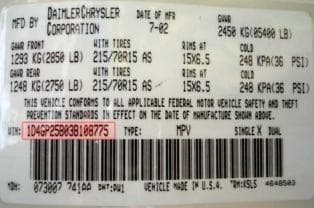
Verify compatibility by providing your 17-digit Vehicle Identification Number (VIN) to the parts specialist. Professional auto recyclers use the VIN and standardized Hollander interchange databases to cross-reference exact engine codes, transmission configurations, trim levels, and option codes.
Authentic OEM parts also feature stamped automaker logos, casting part numbers, or manufacturer barcode tags that verify their original pedigree.
Why do body shops prefer used OEM panels over aftermarket sheet metal?
Body shops prefer used OEM panels because they fit with uniform 3–4mm factory gaps and retain original electro-galvanized rust protection. Aftermarket panels frequently arrive with slight warping, incorrect curvature, or misaligned mounting tabs that require hours of billable labor to correct.
The extra labor required to shape and align an ill-fitting aftermarket panel often exceeds any initial purchase savings, making recycled OEM the faster and more cost-effective choice.
Do recycled OEM engines and transmissions come with warranty protection?
Yes. Reputable automotive recycling facilities provide written warranties ranging from 30 days to 6 months on major mechanical assemblies, with extended protection plans often available. Parts are pre-tested for compression, fluid condition, and mechanical integrity before delivery.
Always review warranty terms, core return requirements, and installation guidelines (such as replacing new seals, filters, and fluids) to maintain full warranty coverage.
Find the Right Recycled OEM Parts for Your Vehicle
Save up to 70% off dealership prices without sacrificing original factory quality. Search our verified inventory of tested recycled OEM engines, transmissions, and body components today.
Relevant Parts Inventory
Tested Recycled OEM Engines
PopularExplore factory-tested used engines with verified compression, donor mileage documentation, and warranty coverage.
Inspected OEM Transmissions
Source original automatic and manual transmissions tested for smooth gear engagement and fluid integrity.
Browse All Recycled Auto Parts
Search our full commercial inventory of genuine recycled OEM auto parts for all makes and models.
Related Automotive Guides
VIN Number Guide: How to Identify the Right Auto Part for Your Vehicle
What Do Used Auto Part Grades Mean? A Practical Grading Guide
How to Identify Genuine OEM Used Parts Online: Forensic Verification and Counterfeit Avoidance