The Environmental and Economic Benefits of Buying Recycled Auto Parts
A data-driven examination of circular manufacturing, energy conservation, hazardous fluid abatement, and Right to Repair economics.
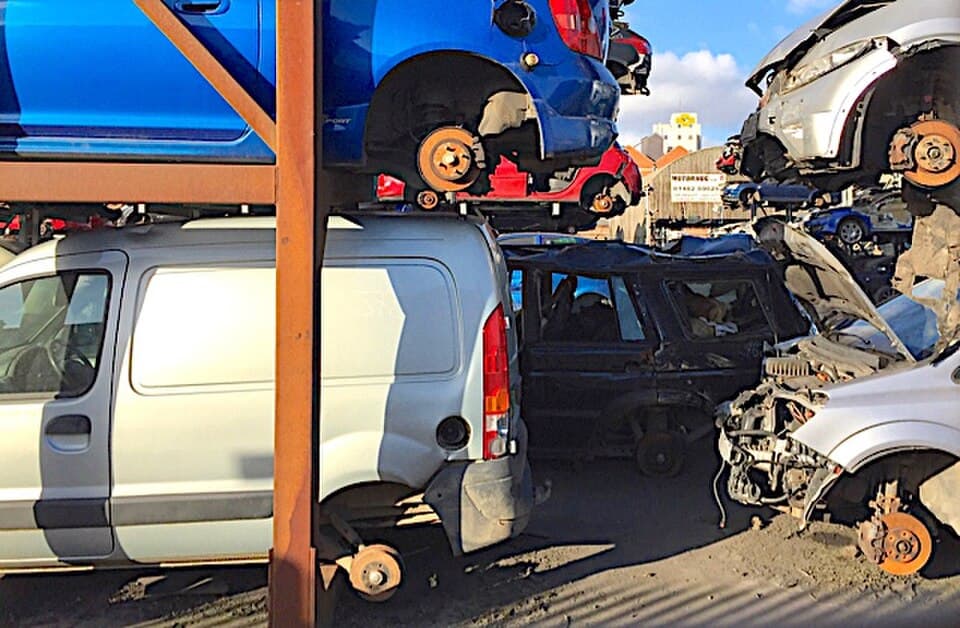
Automotive recycling forms the backbone of the circular industrial economy, recovering over 80% of vehicle weight.
Direct Takeaway & Quick Answer
Buying recycled auto parts delivers a profound double dividend: consumers save 50% to 80% compared to new dealership components, while the environment is spared up to 85% of the energy and greenhouse gas emissions required to manufacture new parts from raw iron ore and bauxite. Furthermore, professional auto recyclers safely divert millions of gallons of toxic motor oil, coolants, and refrigerants from municipal landfills each year.
- Automobiles are the most recycled consumer product on Earth, with 12 to 15 million vehicles processed annually across North America at an 80%+ material recovery rate.
- Reusing an existing engine assembly eliminates the destructive mining, smelting, and casting of hundreds of pounds of virgin aluminum and steel.
- Certified recyclers safely recover regulated ozone-depleting refrigerants (R134a, R1234yf), ethylene glycol coolants, and mercury tilt switches under EPA protocols.
- Recycled parts support the Right to Repair, defeating planned obsolescence for older vehicles when automakers discontinue replacement inventory.
Table of Contents
- 1.The Circular Economy: Automobiles as the World's Most Recycled Product
- 2.Energy and Carbon Abatement: The Science of Reusing vs. Remanufacturing
- 3.Hazardous Waste Depollution: Protecting Water Tables and the Ozone Layer
- 4.Right to Repair and Consumer Economics: Defeating Planned Obsolescence
- #Frequently Asked Questions
In modern discourse surrounding automotive sustainability, public attention focuses almost exclusively on tailpipe emissions and electric vehicle adoption. However, a vehicle's lifetime environmental footprint is determined just as significantly by its "embodied carbon"—the immense energy, raw material extraction, and industrial smelting required to fabricate its components.
The automotive recycling industry constitutes one of the most effective, market-driven circular economy models in global commerce. Valued at an estimated $68.4 billion in 2024 and projected to surpass $112 billion by 2033, professional auto recyclers dismantle between 12 and 15 million end-of-life vehicles (ELVs) each year in the United States and Canada.
Choosing a recycled Original Equipment (ROE) part is not merely a thrifty budget tactic; it is one of the most impactful conservation decisions an individual consumer or commercial fleet manager can make. This comprehensive report details the macroeconomic data, metallurgical conservation metrics, hazardous waste abatement protocols, and consumer cost dividends achieved through automotive recycling.
The Circular Economy: Automobiles as the World's Most Recycled Product
How 12 to 15 Million Vehicles Enter Closed-Loop Supply Chains Each Year
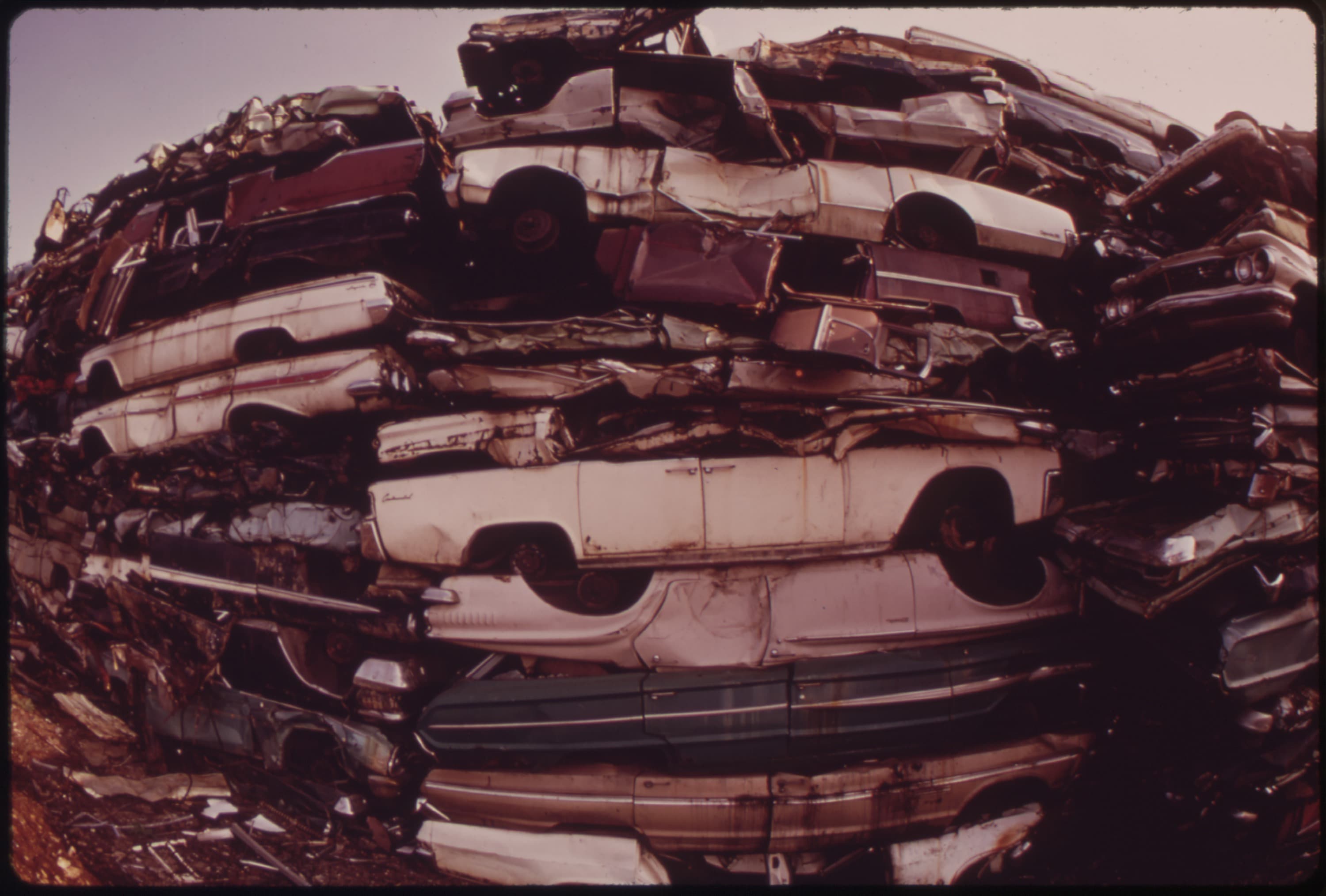
When an automobile reaches the end of its operational lifecycle, it does not simply vanish into a landfill. Under modern automotive recycling frameworks, every vehicle undergoes multi-stage material recovery.
High-value functional components—engines, transmissions, alternators, steering racks, and rust-free body panels—are harvested for immediate reuse. The remaining metal skeleton is compressed by industrial hydraulic balers and fed into hammer-mill shredders, where magnetic separators and eddy-current separators sort ferrous and non-ferrous metals for remelting.
| Vehicle Material | Average Weight per Vehicle | Recovery & Repurposing Method | Environmental Impact / Savings |
|---|---|---|---|
| Ferrous Metals (Steel & Iron) | 2,000 – 2,500 lbs | Magnetic separation; remelted in electric arc furnaces | Conserves 2,500 lbs iron ore and 1,400 lbs coal per ton of steel |
| Cast & Forged Aluminum | 350 – 500 lbs | Eddy-current sorting; engine and wheel smelting | Saves 95% of the energy required to smelt primary bauxite ore |
| Copper (Wiring Harnesses) | 40 – 60 lbs | Hand extraction and granulation | Reduces toxic copper mine tailings and chemical leaching |
| Lead-Acid Starter Batteries | 30 – 45 lbs | Secondary smelting into new battery grids | Over 99% of battery lead is recycled in closed-loop systems |
| Petroleum Fluids & Coolants | 20 – 30 gallons | Filtration, closed distillation, and re-refining | Prevents groundwater contamination and sewer toxicity |
Statistical Milestone: Material Recovery
According to data from the Automotive Recyclers Association (ARA), the recycling of automotive metal saves approximately 85 million barrels of crude oil annually by reducing the energy needed to manufacture replacement vehicle parts from virgin resources.
Energy and Carbon Abatement: The Science of Reusing vs. Remanufacturing
Why Reusing an Existing Engine Saves Up to 85% of Manufacturing Energy
Every vehicle part embodies energy consumed during mining, transportation, smelting, machining, and logistics. When a vehicle owner replaces a failed engine with a brand-new dealership crate motor, they trigger the entire energy chain anew.
Conversely, purchasing a tested, low-mileage recycled OEM engine requires only the nominal energy needed for diagnostic testing, fluid evacuation, and freight transit.
- Aluminum Smelting Savings: Extracting pure aluminum from raw bauxite via the Hall-Héroult electrolytic smelting process requires massive electricity (roughly 14 to 15 kilowatt-hours per kilogram). Reclaiming a used OEM aluminum cylinder head or transmission case uses 95% less energy than producing a new casting.
- Steel Production Emissions: For every single ton of steel preserved through auto recycling, approximately 1.5 metric tons of carbon dioxide (CO2) emissions are prevented from entering the atmosphere.
- Extending Existing Lifecycle: Modern internal combustion engines are engineered to last 200,000 to 250,000 miles with proper lubrication. When a vehicle is salvaged at 60,000 miles due to a rear collision, its engine retains over 75% of its functional lifespan. Reinstalling that engine into another vehicle fully maximizes its embodied carbon investment.

Hazardous Waste Depollution: Protecting Water Tables and the Ozone Layer
How Certified Dismantlers Safely Abate Toxic Automotive Chemicals
An abandoned end-of-life vehicle contains between 20 and 30 gallons of toxic petrochemicals and heavy metals. If improperly handled or dumped in unmonitored scrap yards, these substances contaminate local soil and seep into municipal drinking water aquifers.
Certified automotive recyclers operate dedicated depollution bays equipped with vacuum extraction stations, sealed containment tanks, and oil-water separators.
- Refrigerant Capture (EPA Section 609): Vehicle air conditioning systems contain hydrofluorocarbons (R134a) or hydrofluoroolefins (R1234yf) with potent global warming potential. Certified technicians use sealed recovery units to capture gases into certified cylinders for commercial reclamation.
- Petroleum Re-Refining: Used motor oils, transmission fluids, and differential gear lubricants are pumped into bulk double-walled storage tanks and collected by environmental waste refiners. These fluids are re-refined into high-grade Group II base motor oils or utilized in industrial heating.
- Antifreeze Distillation: Ethylene glycol engine coolant is toxic to wildlife and humans. Recyclers channel used coolant into closed-loop distillation systems that remove heavy metals and replenish chemical anti-corrosion inhibitors for reuse.
- Mercury Switch Removal: Older domestic vehicles contain miniature mercury tilt switches inside underhood and trunk courtesy lighting systems. Through the National Vehicle Mercury Switch Recovery Program (NVMSRP), recyclers have captured millions of mercury pellets, preventing toxic airborne vapor during steel furnace smelting.
Environmental Compliance Standards
Legitimate auto recyclers adhere strictly to the EPA Clean Water Act and Stormwater Pollution Prevention Plans (SWPPP). Look for recyclers holding Certified Automotive Recycler (CAR) accreditation from the ARA, which verifies environmental containment protocols.
Right to Repair and Consumer Economics: Defeating Planned Obsolescence
Keeping Affordable Transportation on the Road for Working Families
Automotive repair costs have significantly outpaced general consumer inflation over the past decade. Dealership labor rates regularly exceed $180 to $250 per hour, and brand-new OEM electronic modules and mechanical assemblies carry punishing retail markups.
When an automaker decides to sunset manufacturing for a steering column, wiring harness, or intake manifold, an otherwise healthy 9-year-old vehicle can be rendered undrivable. Recycled parts represent the true backbone of the independent "Right to Repair" ecosystem.
- Combating Automotive Obsolescence: Salvage yards preserve massive inventories of discontinued, vintage, and out-of-production parts, enabling classic and older daily-driver vehicles to remain fully operational indefinitely.
- Reducing Total Cost of Ownership: By slashing component acquisition costs by 50% to 80%, recycled parts allow working families, tradespeople, and small commercial fleet operators to maintain reliable transportation without absorbing crippling monthly new-car loan payments.
- Lowering Insurance Premiums: When collision repair facilities can source certified Grade A recycled OEM body panels rather than paying list price for new dealer parts, overall claim payout costs are reduced, helping moderate comprehensive insurance rates for all drivers.
Frequently Asked Questions
How much energy does buying a recycled auto part actually save?
Reusing an existing automotive component saves up to 80% to 85% of the energy required to manufacture a new component from virgin materials, eliminating the heavy carbon emissions associated with iron mining and aluminum smelting.
Are recycled auto parts safe and reliable for daily driving?
Yes. Recycled OEM parts were engineered by the original vehicle manufacturer and tested under strict federal safety standards. When inspected and graded by a licensed recycler, they provide reliable performance comparable to new factory parts.
How much money can I save by choosing recycled parts over new dealer parts?
Consumers and repair facilities typically save between 50% and 80% compared to new dealership list prices on major mechanical assemblies, electrical components, and collision sheet metal.
What happens to the hazardous fluids in end-of-life vehicles?
Certified recyclers evacuate all motor oils, transmission fluids, coolants, and A/C refrigerants using closed vacuum recovery systems. Fluids are re-refined or recycled under strict EPA Clean Air and Clean Water regulations.
How does buying recycled parts support the Right to Repair?
Recycled parts keep older vehicles operational long after automakers discontinue manufacturing new replacement parts, allowing independent mechanics and vehicle owners to repair cars without dealership monopolies.
Are automobiles the most recycled product in North America?
Yes. More than 80% to 85% of a vehicle's total weight is recycled and returned to the manufacturing supply chain, making automobiles the most recycled manufactured consumer product in the world.
Does buying recycled auto parts void my vehicle warranty?
Under the federal Magnuson-Moss Warranty Act, vehicle manufacturers cannot void your remaining warranty simply because you installed a recycled or aftermarket replacement part, unless they can prove the specific part caused the failure.
Drive Smarter, Save Money, and Protect the Planet
Join the circular automotive economy. Browse our nationwide catalog of tested, guaranteed recycled OEM auto parts backed by our 6-month warranty and fast commercial shipping.
Relevant Parts Inventory
Certified Recycled Engines
Eco-FriendlyExplore eco-friendly recycled OEM engine assemblies with 6-month warranty.
Tested Recycled Transmissions
Save money and resources with bench-tested OEM automatic and manual gearboxes.
Recycled Auto Body Panels
Source original factory rust-free sheet metal panels with original paint.
About USA Used Auto Parts
Learn about our commitment to sustainable automotive recycling and quality standards.