How Auto Part Interchange Works: Hollander Numbers Explained
A technical deep dive into Hollander Interchange numbers, shared automotive platforms, cross-compatibility databases, and salvage industry fitment standards.

Hollander Interchange reference manuals and modern digital databases have set the standard for cross-vehicle automotive part compatibility since 1934.
Direct Takeaway & Quick Answer
Hollander Interchange numbers are standardized cross-referencing catalog identifiers that index whether an automotive component from one vehicle model, trim, or year will mechanically fit and operate in another. Established in 1934, the Hollander system serves as the universal operating standard for the automotive recycling and salvage industries, enabling vehicle owners and professional repair facilities to source compatible used OEM parts across sibling brands and shared platforms without paying dealership markups.
- Originating during the Great Depression in 1934, Roy Hollander created the first cross-reference system to overcome national part shortages by cataloging interchangeable vehicle components.
- Unlike OEM catalog part numbers that change with cosmetic revisions or packaging updates, Hollander numbers categorize components strictly by physical dimensions, bolt patterns, and functional interchangeability.
- Automakers regularly build multiple vehicle models across shared corporate platforms (badge engineering), creating extensive mechanical cross-compatibility between sister brands and luxury nameplates.
- Modern automotive recyclers index yard inventory through Hollander Powerlink and digital networks like Car-Part.com, linking thousands of dismantlers into an interconnected parts marketplace.
- While core assemblies (engine long blocks, transmission gearboxes, differential carriers) interchange seamlessly, buyers must occasionally transfer ancillary sensors, brackets, or wiring harnesses from their original core.
Table of Contents
- 1.The History and Evolution of the Hollander Interchange System
- 2.How the Hollander Numbering System Works
- 3.Interchange Compatibility vs. Direct OEM Replacement
- 4.Common Interchange Scenarios: Shared Platforms and Badge Engineering
- 5.The Role of Hollander in the Salvage and Recycling Industry
- 6.Digital Interchange Tools: Powerlink, Car-Part.com, and Beyond
- 7.How to Look Up Hollander Numbers and Verify Compatibility
- 8.Limitations, Nuances, and Caveats of Interchange Data
- #Frequently Asked Questions
When a catastrophic mechanical failure strikes—such as a cracked engine cylinder head, a slipping automatic transmission, or severe body damage from a collision—most car owners assume their replacement search is restricted strictly to their exact make, model, and model year. Dealership parts departments routinely reinforce this misconception, as parts counters search solely through proprietary automaker catalogs that link replacement assemblies to a single original equipment manufacturer (OEM) part number.
In reality, the global automotive manufacturing sector operates extensively on shared architectures, modular powertrain families, and corporate badge engineering. A starter motor, steering rack, or cylinder head installed on an entry-level family sedan is often mechanically identical to one fitted inside an upscale luxury crossover produced under the same parent automotive group. However, because each corporate brand markets, packages, and invoices that component under its own unique OEM part number, traditional retail channels hide this cross-vehicle compatibility from the consumer.
This is the exact information gap that Hollander Interchange numbers were engineered to solve. For more than ninety years, the Hollander numbering system has functioned as the universal rosetta stone for the automotive recycling and salvage industries. By indexing components based on physical fitment, bolt pattern alignment, and operational tolerance rather than packaging SKUs, Hollander data empowers professional dismantlers, repair shops, and vehicle owners to locate compatible OEM parts across hundreds of vehicle variants.
This comprehensive guide examines how the Hollander system works, how interchange data enables cross-vehicle compatibility, how digital inventory networks operate, and how you can verify interchange fitment when sourcing recycled components for your vehicle.
The History and Evolution of the Hollander Interchange System
From Depression-Era Scrap Yards to the Universal Automotive Standard
During the depths of the Great Depression in the early 1930s, vehicle owners across the United States faced an acute economic challenge. Automotive manufacturers were producing hundreds of distinct models, yet replacement parts were prohibitively expensive or entirely unavailable due to widespread factory slowdowns. Automobile wrecking yards contained thousands of scrapped vehicles holding functional components, but salvage operators had no reliable method to determine whether an axle, generator, or steering box from a scrapped Hudson would bolt into a stranded Studebaker, Chrysler, or Chevrolet.
Roy Hollander, working alongside his wife Hildur in Minneapolis, recognized that many automotive components were engineered by independent Tier-1 suppliers or shared across automaker lineages with only minor cosmetic variations. Hollander began systematically measuring, physically disassembling, and test-fitting components across disparate vehicle makes. In 1934, he published the first edition of the "Hollander Auto-Truck Interchange," a printed reference manual that quickly became known throughout the salvage trade as the "Hollander Bible."
Over the subsequent decades, as the post-World War II automotive industry exploded with dozens of distinct car divisions and thousands of new engine configurations, the Hollander manual expanded into a multi-volume library updated annually. In the 1970s and 1980s, Hollander transitioned from heavy printed binders to microfiche cards, and eventually into mainframe computer software.
Today, operating under Solera Holdings, Hollander software powers inventory indexing, interchange lookup, and electronic parts ordering for thousands of professional automotive recycling facilities worldwide. What began as a handwritten notebook in a Minnesota salvage yard has evolved into a global database standardizing tens of millions of vehicle fitment records.
The "Hollander Bible" in Automotive Lore
For over fifty years before computerized inventory systems existed, salvage yard owners kept printed, dog-eared copies of the multi-volume Hollander Interchange manual at the sales counter. Wreckers referred to it simply as the "Bible" because its compatibility tables were treated as definitive truth when settling fitment disputes between mechanics and dismantlers.
How the Hollander Numbering System Works
Deconstructing Part Groups, Base Identification Numbers, and Option Suffixes
To understand how Hollander simplifies automotive parts searching, one must first recognize the structural flaw of OEM part numbering. When an automaker makes an insignificant revision—such as changing the supplier of a plastic wire clip on an alternator or updating a barcode label on a valve cover—the factory catalog assigns an entirely new 7-to-10 digit OEM part number. Although the old and new parts remain 100% interchangeable on the assembly line, dealership databases flag them as separate parts, often falsely showing the older version as obsolete or out of stock.
The Hollander system ignores arbitrary labeling changes and groups parts exclusively by mechanical and electrical compatibility. Hollander organizes components into standardized part groups, assigning unique interchange numbers to components that share identical critical mounting dimensions, electrical interfaces, and operational specifications. If five different OEM part numbers across four model years physically bolt in and function identically, all five are assigned the identical Hollander interchange number.
When an assembly has minor factory variations that impact fitment—such as an engine option with or without an integrated oil cooler, or an automatic transmission calibrated for a 2-wheel-drive versus 4-wheel-drive transfer case—the Hollander system utilizes sub-variant codes or alphanumeric suffix letters. This ensures that recyclers can instantly identify whether a core component represents a direct drop-in replacement or requires minor ancillary adaptation.
Furthermore, Hollander tracks directional compatibility through one-way interchange rules. When an automaker updates a component mid-generation with a reinforced design that retrofits backwards onto earlier model years, but the earlier design cannot safely fit newer vehicles, Hollander catalogs the relationship accordingly, preventing dangerous or improper installations.
| Part Group Category | System Classification | What the Interchange Code Dictates | Mechanical Scope of Interchange |
|---|---|---|---|
| 100 Series | Wheels, Hubs & Steering | Bolt pattern, offset, center bore, and wheel diameter | Cross-references alloy and steel wheels across sibling brands |
| 200 Series | Suspension & Axle Assemblies | Control arm geometry, spindle height, and axle ratios | Ensures direct bolt-in fitment for differential carriers and struts |
| 300 Series | Complete Engine Assemblies | Engine block casting, cylinder head configuration, and timing architecture | Indexes long blocks and complete assemblies across multiple vehicle years |
| 400 Series | Transmissions & Transfer Cases | Bellhousing bolt pattern, torque converter stall, and internal gear ratios | Verifies hydraulic and electronic valve body compatibility across platforms |
| 500 Series | Electrical & Electronic Modules | Pinout configuration, harness connectors, and base firmware protocol | Cross-references alternators, starters, fuse blocks, and body computers |
| 600-700 Series | Exterior Body Panels & Glass | Mounting hinges, latch positions, stamping contours, and glass curvature | Identifies interchangeable doors, fenders, hoods, and tailgate assemblies |
| 800 Series | Cooling, HVAC & Fuel Systems | Core thickness, mounting brackets, hose port angles, and pump fittings | Standardizes radiators, condensers, AC compressors, and fuel tanks |
- Base Part Categorization: Every major automotive system is assigned a standardized category number, preventing indexing confusion between similar assemblies.
- Interchange Consolidation: Multiple differing OEM catalog numbers are collapsed into a single Hollander master code whenever the physical assemblies are functional twins.
- Option Suffix Distinctions: Distinct letter suffixes identify crucial sub-specifications, such as whether an intake manifold includes an integrated EGR port or electronic throttle bracket.
- Supersession Tracking: When an automaker issues a technical supersession that upgrades an older design without altering external fitment, Hollander tracks the one-way or two-way interchange pathway.
Interchange Compatibility vs. Direct OEM Replacement
Understanding Form, Fit, and Function Across Differing Part Numbers
In the automotive aftermarket, understanding the difference between a direct replacement and an interchangeable part is essential for making informed purchasing decisions. A direct replacement matches the specific OEM part number listed on your vehicle build sheet. While this guarantees exact replication, it dramatically restricts your sourcing pool, often driving up prices and leading to prolonged backorders for discontinued items.
Interchange compatibility operates on engineering principles of form, fit, and function. "Form" ensures the component occupies the identical physical envelope without interfering with adjacent engine bay or chassis components. "Fit" guarantees that mounting brackets, bellhousing bolt patterns, alignment dowels, and fluid ports line up to within original factory tolerances. "Function" ensures that the component delivers identical operational parameters—such as oil pressure, gear multiplication ratios, electrical resistance, and structural load capacity.
Because automakers frequently share mechanical components across vehicle divisions, interchange parts frequently originate from an entirely different marque. For instance, an alternator harvested from a high-volume passenger sedan may feature identical electrical output, pulley alignment, and plug pinouts as the unit specified for a high-end luxury SUV. Sourcing through interchange data expands the available inventory pool tenfold while maintaining original equipment engineering.
Moreover, Tier-1 component manufacturers like Denso, Bosch, AISIN, and ZF design standard modular assemblies that are supplied simultaneously to multiple competing automakers. An automatic transmission manufactured by ZF may be installed in vehicles from BMW, Chrysler, and Jaguar. While each automaker assigns its own unique proprietary part number to the transmission casing, Hollander interchange recognizes the underlying mechanical equivalence.
Form, Fit, and Function (FFF) in Automotive Engineering
The concept of Form, Fit, and Function (FFF) is an aerospace and automotive engineering standard. If a donor component satisfies all three criteria—bolting directly to existing chassis points, clearing all neighboring assemblies, and performing to identical factory specifications—it is classified as a valid interchange, regardless of what brand emblem is stamped on the outer plastic cover.

Common Interchange Scenarios: Shared Platforms and Badge Engineering
How Corporate Platform Architectures Create Extensive Cross-Fitment
The modern automotive manufacturing industry is built upon shared vehicle platforms. Developing an entirely new vehicle architecture—including crash testing, suspension tuning, powertrain certification, and tooling—costs billions of dollars. To recoup these massive investments, automotive conglomerates design modular platforms that underpin dozens of different vehicles across multiple market segments and sister brands.
A prominent example of this practice is "badge engineering," where vehicles from different corporate divisions share virtually all structural, mechanical, and electrical components, differing only in exterior sheet metal grilles, headlight styling, and interior upholstery. When shopping for replacement mechanical parts for a vehicle built on a shared platform, the mechanical core is frequently identical across all corporate sibling models.
Beyond badge-engineered twins, modular vehicle architectures allow cross-compatibility across completely different vehicle classes. A compact crossover and a sporty hatchback produced by the same global manufacturer frequently utilize identical front subframes, electric power steering racks, brake calipers, and transaxles. Hollander interchange data maps these relationships, allowing car owners to source components from abundant, high-production models rather than hunting for rare, low-production variants.
This cross-chassis compatibility is especially advantageous for suspension subframes, steering gears, and axle carriers. While cosmetic outer body panels differ between a premium sedan and an everyday station wagon, their underlying front subframes and rear multi-link control arms are often stamped from the exact same tooling dies, making Hollander-verified suspension replacements significantly easier to locate.
- General Motors Truck & SUV Architecture: Full-size trucks and full-size SUVs across Chevrolet, GMC, and Cadillac share identical V8 engine long blocks, 6-speed and 10-speed transmissions, transfer cases, and front suspension knuckles across shared platform generations.
- Ford Motor Company Drivetrain Sharing: Ford and Lincoln vehicles built on shared chassis platforms share identical modular engines, automatic transmissions, and rear differential carriers across multiple vehicle generations.
- Stellantis / FCA Powertrain Families: The widespread use of standard V6 and V8 engines and Torqueflite automatic gearboxes across Dodge, Chrysler, Jeep, and Ram vehicles creates extensive interchange across commercial trucks, performance cars, and family SUVs.
- Toyota & Lexus Platform Commonality: Front-wheel-drive and all-wheel-drive platforms across Toyota and Lexus luxury divisions share identical V6 engine blocks, transaxles, brake master cylinders, and steering columns.
- Volkswagen Auto Group (VAG) Modular Platforms: The MQB and MLB modular platform architectures share core turbocharged 4-cylinder engines, DSG dual-clutch transmissions, and all-wheel-drive Haldex couplers across Audi, Volkswagen, and Porsche applications.
The Role of Hollander in the Salvage and Recycling Industry
How Computerized Dismantlers Track, Index, and Warehouse Inventory
Before computerized interchange systems existed, a salvage yard operator had to manually inspect every incoming vehicle, consult printed reference binders, and hand-write stock tags. If a customer called looking for a steering gear for a specific sedan, the counter person had to mentally recall whether an earlier model wagon sitting in the back corner of the yard shared the same steering box.
Today, Hollander functions as the foundational database inside modern Yard Management Systems (YMS). When an automotive recycler acquires an insurance total-loss or auction vehicle, the intake process begins with a barcode scan of the 17-digit Vehicle Identification Number (VIN). The Hollander system instantly decodes the VIN, breaking down the exact engine code, transmission model, brake package, axle ratio, and safety equipment installed at the factory.
With a single click, the yard inventory software generates an automated harvesting manifest. Every valuable component—from the complete engine down to the mirror assemblies—is populated with its standardized Hollander interchange number. Technicians inspect each harvested part, record its physical condition and verified donor vehicle mileage, attach an RFID or barcode inventory label, and place the component in climate-controlled indoor racking for immediate order fulfillment.
This automated linkage extends directly into insurance estimating systems like CCC ONE, Mitchell, and Audatex. When an insurance adjuster calculates collision repairs, the estimating platform queries Hollander interchange data to locate recycled OEM panels and assemblies, significantly reducing repair costs while preserving factory fitment.
- 1Donor Intake & VIN Decoding: The incoming donor vehicle's 17-digit VIN is scanned into the Hollander system, decoding the precise factory trim, powertrain variant, and optional factory equipment packages.
- 2Automated Interchange Mapping: Hollander software automatically cross-references every functional component on the vehicle against its proprietary interchange database, generating standardized Hollander part numbers.
- 3Component Testing & ARA Grading: Dismantlers extract high-demand assemblies, perform compression testing on engines, test-spin gearboxes, and assign Automotive Recyclers Association (ARA) condition grades.
- 4Barcode Tagging & Climate-Controlled Warehousing: Tested parts receive tamper-evident barcode tags displaying the stock number, Hollander number, and donor VIN, and are logged into specific warehouse shelf locations.
- 5Real-Time National Network Broadcast: The indexed component is immediately broadcast across nationwide B2B and B2C parts locator networks, making it searchable by thousands of repair shops and vehicle owners in real time.
Core Management and Remanufacturing Tracking
Automotive recyclers also use Hollander interchange numbers to manage rebuildable cores. Remanufacturers of alternators, steering racks, and cylinder heads rely on Hollander classifications to buy matched cores in bulk, ensuring that rebuilt assemblies meet precise dimensional standards for resale.
Digital Interchange Tools: Powerlink, Car-Part.com, and Beyond
Connecting Thousands of Independent Recyclers into a Unified Real-Time Market
The transition from localized salvage operations to a nationwide, interconnected parts marketplace was made possible by digital interchange networks. At the core of this ecosystem is Hollander Powerlink, the enterprise software application utilized by top automotive recycling facilities to manage inventory, sales invoicing, logistics dispatch, and cross-yard part sourcing.
Complementing internal yard management systems are consumer- and commercial-facing interchange locators, most notably Car-Part.com. Founded in 1997, Car-Part.com connects inventory data from more than 4,500 independent auto recyclers across the United States and Canada. When a user enters their vehicle year, model, and requested component, the platform uses Hollander interchange logic behind the scenes to display every compatible part in recyclers' inventories nationwide.
Alternative yard management platforms such as Car-Part Checkmate and Pinnacle also license or map to Hollander interchange tables to ensure multi-system synchronization. Recyclers can buy and sell components across regional yard networks (known as brokering or trading partner networks) with complete confidence that part specifications align.
For customers shopping through dedicated recycled auto parts platforms like USA Used Auto Parts, this digital infrastructure provides unprecedented access. Instead of calling multiple local junkyards hoping someone has an exact model match, buyers can tap into nationwide inventory pools where tens of thousands of verified, interchange-compatible OEM parts are cataloged, photographed, tested, and prepped for freight delivery.
- Hollander Powerlink: The primary enterprise inventory management system used by modern dismantlers to track vehicle acquisition, teardown work orders, warehouse bins, and wholesale shipping.
- Car-Part.com Network: The largest public and B2B parts aggregation engine in North America, indexing more than 200 million recycled automotive parts across participating dismantlers.
- Eden Multi-Yard Trading Network: A dedicated wholesale trading network integrated into Hollander systems that allows licensed salvage yards to fulfill parts requests through partner facilities nationwide.
- Checkmate & Pinnacle Systems: Robust alternative yard management suites that synchronize interchange compatibility data across regional and national dismantler consortiums.
Why Recyclers Ask for Your VIN Instead of Part Numbers
When inquiring about a used engine or transmission, professional recyclers will always request your 17-digit VIN rather than your dealer part number. The VIN allows their Hollander system to decode your exact factory build configuration, instantly revealing every compatible interchange option across all vehicle makes and years.
How to Look Up Hollander Numbers and Verify Compatibility
A Practical Guide for Vehicle Owners, DIYers, and Independent Garages
Because the Hollander Interchange database is a proprietary commercial product licensed primarily to professional dismantlers and body shops, everyday motorists cannot simply purchase an inexpensive consumer app to browse raw Hollander tables. However, accessing the benefits of Hollander interchange data is straightforward when you follow a structured verification process.
The first and most critical step is gathering your vehicle's vital documentation. Never attempt to source interchangeable mechanical assemblies using only the vehicle model year and marketing trim name. Automobile manufacturers frequently execute "split-year" production revisions, where the first half of a model year receives one engine calibration or transmission bellhousing, and the second half receives an updated configuration.
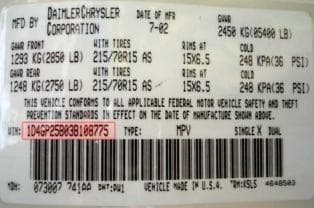
By providing your complete 17-digit VIN, production date (located on the driver-side door jamb sticker), and any specialized option codes (such as GM RPO codes found in the glove box or spare tire well), specialized recycled parts providers can query Hollander databases directly. This ensures that any recommended interchange component matches your vehicle's exact electrical harness connectors, computer communications protocols, and physical bracket locations.
Additionally, independent mechanics and experienced DIYers can inspect physical casting numbers cast directly into engine blocks, cylinder heads, and transmission housings. When matched against Hollander application charts, casting numbers confirm authentic metallurgical origin and mechanical compatibility prior to purchase.
- 1Record the Complete 17-Digit VIN: Locate your vehicle's VIN on the driver-side lower windshield corner or door jamb certification label. This code specifies the exact manufacturing plant, chassis series, and engine displacement.
- 2Check the Build Date on the Door Jamb Certification Label: Note the month and year of vehicle assembly. This verifies whether your vehicle was manufactured before or after mid-year production engineering changes.
- 3Locate Factory Option / RPO Codes: Check vehicle service identification stickers (commonly located in the glovebox, trunk floor, or spare tire compartment) for three-digit option codes that specify transmission models, suspension packages, or axle ratios.
- 4Submit Details to an Interchange Specialist: Provide your VIN and build specifics to a certified recycled parts provider. Their technicians will cross-reference Hollander interchange tables to identify all compatible donor vehicle models and years.
- 5Verify Critical Physical Interfaces Prior to Installation: Before unbolting your original component, conduct a side-by-side visual comparison of key interfaces: mounting bracket bolt holes, oil filter boss locations, sensor bung threading, and electrical harness plug styles.
Casting Numbers vs. Hollander Codes
Casting numbers are raised alphanumeric strings permanently molded into molten engine blocks, cylinder heads, and transmission cases at the foundry. Recyclers use casting numbers in conjunction with Hollander data to guarantee that internal structural features—such as oil passage routing and combustion chamber volumes—are identical.
Limitations, Nuances, and Caveats of Interchange Data
Recognizing When Core Fitment Requires Swapping Ancillary Components
The Hollander Interchange system is widely celebrated for its accuracy, achieving reliable mechanical fitment across millions of automotive transactions. However, buyers must understand what an interchange classification encompasses. In automotive recycling terminology, interchange specifically certifies the integrity of the core mechanical assembly—such as the engine cylinder block and heads (long block), transmission case and geartrain, or differential housing and axle tubes.
When an automaker installs the identical 3.5L V6 engine inside both a front-wheel-drive sedan and a tall crossover SUV, the engine block, crankshaft, pistons, and cylinder heads are identical, qualifying them for the same Hollander long block interchange. However, the crossover SUV may require a deeper stamped-steel oil pan to clear a crossmember, an alternator bracket positioned two inches higher to clear the steering rack, or a different water outlet neck for the radiator hose.
Similarly, modern electronic control modules (ECUs, TCMs, and BCMs) introduce software nuances. While an electronic module may share the exact same Hollander physical interchange number, installing it into your vehicle will often require professional flashing, immobilizer synchronization, or VIN relearn procedures using factory diagnostic scan tools before the vehicle will start.
Variable valve timing (VVT) phasers, knock sensor plug designs, and transmission internal pressure switches can also vary across model years within an otherwise compatible engine family. Knowing these nuances allows professional technicians to transfer sensors and brackets from the failed core, ensuring a smooth installation without unexpected downtime.
| Assembly Being Replaced | What Hollander Interchange Guarantees | What Often Must Be Transferred from Your Original Core |
|---|---|---|
| Complete Engine (Long Block) | Engine block casting, cylinder heads, crankshaft, pistons, camshafts, and internal timing components | Intake manifold, exhaust manifolds, oil pan, oil pickup tube, motor mount brackets, alternator, wiring harness, and sensors |
| Automatic / Manual Transmission | Bellhousing bolt pattern, internal gear ratios, torque converter hub spacing, and output shaft spline count | External shift linkage levers, neutral safety switches, transmission cooler line fittings, vehicle speed sensors, and crossmember brackets |
| Rear Axle & Differential Assembly | Differential carrier housing, ring and pinion gear ratio, axle spline count, and suspension spring perches | Brake backing plates, parking brake cables, ABS wheel speed sensors, and companion flange pinions |
| Front Strut / Steering Knuckle | Hub bearing bore, ball joint taper diameter, brake caliper mounting ear spread, and strut tower bolt pattern | ABS sensor harness clips, brake dust shield sheet metal, and stabilizer bar end links |
| Bumper & Front Fascia Assemblies | Structural bumper reinforcement bar mounting, radiator core support bolt patterns, and fender line contours | Parking assist radar brackets, fog lamp wiring pigtails, active shutter grilles, and front camera modules |
Modern Electronic Modules and Anti-Theft Lockouts
When sourcing electronic control modules (such as Engine Control Modules, Transmission Control Modules, or Instrument Clusters) through interchange data, physical plug compatibility does not guarantee instant operation. Most modern vehicles link control modules to the vehicle's immobilizer network. These components must be flashed with your vehicle's VIN using an SAE J2534 pass-thru device or OEM diagnostic tool to operate properly.
Frequently Asked Questions
What exactly is a Hollander Interchange number?
A Hollander Interchange number is a standardized catalog code used by the automotive recycling and salvage industry to identify parts that are mechanically and functionally interchangeable across different vehicle makes, models, and production years, regardless of original OEM part number differences.
Created in 1934, the Hollander system collapses thousands of redundant factory part numbers into unified fitment codes based on physical dimensions, bolt patterns, and operational specifications.
Why do automakers change part numbers if the physical part has not changed?
Automakers frequently update OEM part numbers due to supplier contract changes, minor packaging revisions, cosmetic label updates, or non-functional engineering tweaks. While dealerships treat these as completely separate parts, Hollander recognizes them as functionally identical interchange units.
This practice often leads car owners to believe a replacement part is discontinued or out of stock when thousands of identical interchangeable units exist under previous or sister-brand part numbers.
Can an engine from a different car model safely replace my original engine?
Yes, provided the engine shares the same Hollander interchange number. Automakers regularly use the same core engine long blocks across multiple vehicle lines, sister brands, and model years. You may simply need to transfer vehicle-specific brackets, oil pans, or manifolds from your original engine core.
For example, full-size trucks and full-size SUVs from General Motors share identical V8 long blocks that bolt directly into either vehicle with complete factory reliability.
What is the difference between an interchangeable part and a direct fit replacement?
A direct fit replacement matches your vehicle's exact original OEM factory part number and trim configuration. An interchangeable part comes from a different vehicle model or year but possesses identical physical mounting dimensions, electrical specifications, and mechanical function, making it an operational equal.
Interchange parts allow vehicle owners to source high-quality OEM components from abundant sister models at substantial savings rather than hunting for rare exact-model duplicates.
Does a Hollander interchange guarantee that every bracket and sensor will match?
No. Hollander interchange certifies the core mechanical assembly (such as the engine long block or transmission casing). Depending on the donor vehicle application, you may need to swap your original intake manifold, oil pan, sensor harness, or mounting brackets onto the replacement assembly.
Professional mechanics routinely swap external "dress" items during installation to ensure proper clearance and wiring harness connectivity in the recipient chassis.
How does USA Used Auto Parts ensure correct interchange fitment for my order?
USA Used Auto Parts verifies every order using advanced digital interchange systems and complete 17-digit VIN decoding. Our technical specialists review your vehicle's production date, engine code, transmission model, and option packages to ensure the replacement component matches your exact fitment requirements.
Every verified interchange part in our inventory is backed by our comprehensive 6-month replacement warranty and dedicated technical customer support.
Find Compatible Used Parts Using Hollander Interchange
Stop paying dealership markups or struggling to find rare parts. Our interchange specialists verify exact mechanical fitment across thousands of vehicle models and years backed by our 6-month warranty.
Relevant Parts Inventory
Search All Parts
Full CatalogSearch our comprehensive catalog of verified used OEM auto parts indexed with full Hollander interchange compatibility.
Used Engines Inventory
Tested EnginesFind compression-tested used OEM engines cross-referenced across shared platforms and backed by our 6-month warranty.
Used Transmissions Inventory
Inspected GearboxesBrowse bench-tested automatic and manual transmissions verified through Hollander interchange data for exact fitment.
Contact Technical Specialists
Speak with our certified automotive interchange specialists to verify cross-vehicle fitment for your specific VIN.
Related Automotive Guides
VIN Number Guide: How to Identify the Right Auto Part for Your Vehicle
OEM vs Aftermarket vs Used Parts: What's the Difference?
What Do Used Auto Part Grades Mean? A Practical Grading Guide